A hairline crack in a concrete column doesn't look like much. Most people would walk past it without a second thought. But a structural engineer looking at that same crack sees a decision point, patch it with ordinary cement mortar and hope for the best, or use something strong enough to actually restore the concrete's original strength. That second option is usually epoxy grouting material, and understanding what it actually does explains why it's become standard on serious repair and machine foundation work across Indian construction.
This guide covers what epoxy grouting material is, the main types available, where it's used, and the real benefits it offers over traditional cement-based grouts.
What Is Epoxy Grouting Material?
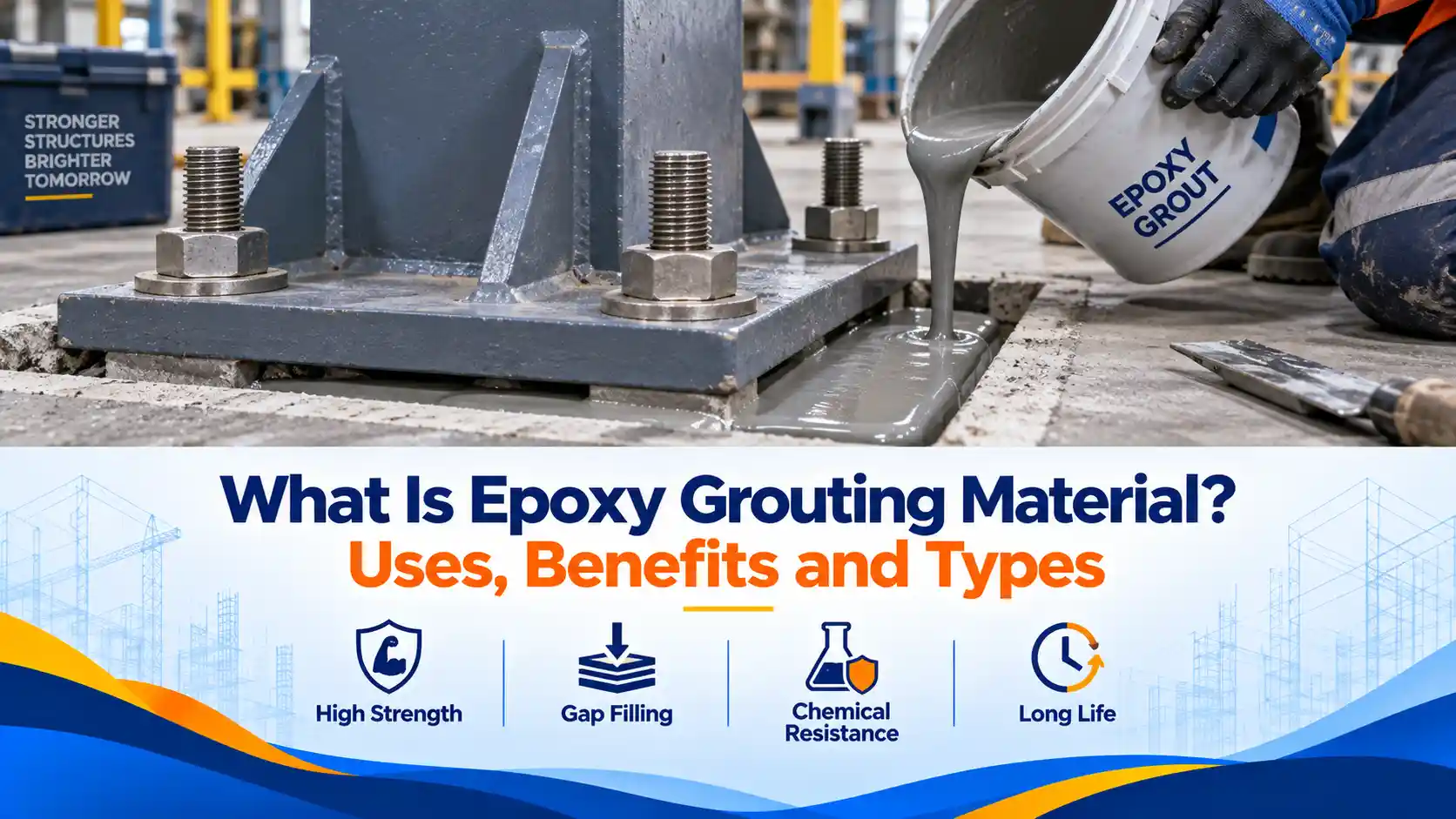
Epoxy grouting material is a two-component compound, a resin and a hardener, that chemically reacts and cures into an extremely strong, dense filler used to repair concrete, bond new concrete to old, and anchor heavy equipment.
Unlike cement grout, which relies on hydration to gain strength over days, epoxy grout cures through a chemical reaction between its two components. This gives it much higher compressive and bonding strength, along with excellent resistance to chemicals, vibration, and water penetration, properties that make it suitable for jobs where ordinary cement mortar simply isn't strong or durable enough.
What Types of Epoxy Grouting Material Are Available?
- Structural epoxy grout is formulated for high load-bearing applications, commonly used to fill gaps under machine bases, structural bearing plates, and precast connections where strength transfer matters most.
- Non-shrink epoxy grout is engineered to maintain its exact volume as it cures, critical for machine foundations and any application where even slight shrinkage would create a gap and allow vibration or movement.
- Epoxy injection resin is a lower-viscosity formulation designed to be injected directly into fine cracks in concrete, filling voids that a thicker grout couldn't reach.
- Epoxy mortar combines epoxy resin with fine aggregate, used for patching and rebuilding damaged concrete surfaces where both strength and a workable, trowel-applied consistency are needed.
What Are the Main Epoxy Grout Uses in Construction?
Epoxy grout uses span structural repair, machine foundation work, and specialized flooring, wherever standard cement grout can't provide enough strength or chemical resistance.
Machine base grouting is one of the most common applications, filling the gap between a heavy machine's base plate and its concrete foundation to transfer load evenly and absorb vibration without the joint deteriorating over time. Epoxy grout is also widely used for anchoring bolts and structural steel connections, where a strong, precise bond is essential for the connection to perform as designed. In industrial flooring, epoxy-based systems provide a seamless, chemical-resistant surface suited to factories, warehouses, and pharmaceutical facilities where cleanliness and durability both matter.
How Does Epoxy Grouting Help With Concrete Crack Repair?
Epoxy grouting helps with concrete crack repair by restoring structural continuity across a crack, effectively rebonding the concrete rather than just covering the gap.
When epoxy resin is injected into a crack under pressure, it fills the void completely, including fine branching cracks that a surface patch would never reach. Once cured, the epoxy bonds so strongly to the surrounding concrete that the repaired section can regain close to its original structural strength, something cement-based patching generally can't achieve on its own. This makes epoxy injection a preferred method for structural cracks in columns, beams, and load-bearing walls, rather than reserving it only for cosmetic surface repairs.
What Are the Key Benefits of Epoxy Grouting Over Cement Grout?
The main benefits of epoxy grouting are higher strength, better chemical resistance, minimal shrinkage, and faster usability compared to standard cement-based grout.
Epoxy grout typically reaches a compressive strength several times higher than cement grout, which matters directly for load-bearing repairs and machine foundations under constant vibration. It also resists oils, acids, and many industrial chemicals that would gradually degrade a standard cement grout, making it the practical choice in factories and chemical processing environments. Because it doesn't rely on water for curing, epoxy grout doesn't shrink the way cement grout can, and it often reaches usable strength faster, which can shorten downtime on a machine installation or urgent structural repair.
How Big Is India's Market for Construction Chemicals Like Epoxy Grout
India's construction chemicals market, which includes epoxy grouting products alongside waterproofing and repair compounds, was valued at around USD 2.6 billion in 2025 and is projected to reach USD 4.8 billion by 2034, growing at a yearly rate of about 6.5%. Repair and rehabilitation chemicals are a significant part of this growth, driven partly by the fact that a large share of India's metropolitan commercial buildings are now over 20 years old and increasingly need structural repair work like crack injection. (Market data source:IMARC Group India Construction Chemicals Market Report, 2026.)
For buyers, this steady growth has brought more specialised grout formulations and price points to the market than a decade ago, which makes it worth comparing suppliers directly for the specific application your project needs.
What Mistakes Should You Avoid When Using Epoxy Grouting Material?
Don't skip proper surface preparation. Epoxy grout bonds through direct chemical adhesion, so any dust, oil, or loose material left on the surface can seriously weaken the bond, even if the grout itself is high quality.
Don't ignore the mixing ratio between resin and hardener. Epoxy grout only performs as designed when the two components are mixed in the exact ratio specified by the manufacturer, an off-ratio mix can cure incorrectly and lose much of its strength.
Don't use a general-purpose epoxy grout for a specialized job like machine foundation work. Non-shrink, structural-grade formulations exist specifically for that purpose, and substituting a standard patching grout can lead to shrinkage and vibration problems over time.
Where Can You Buy Epoxy Grouting Material Online in India?
You can buy epoxy grouting material online through URSBID by posting your requirement and getting quotes from verified suppliers.
Once you know the type of epoxy grout your project needs, structural, non-shrink, injection resin, or mortar, the next step is finding a supplier who can deliver consistent, correctly formulated product. Toget epoxy grouting material rates through URSBID, describe your requirement and registered vendors send their quotations directly, so you can compare pricing instead of relying on a single supplier's recommendation.
If your project also involves broader repair or waterproofing work, checkingrepair and maintenance services on the same platform helps keep your material and labour sourcing aligned on the same timeline.
Frequently Asked Questions
What is epoxy grouting material used for? Epoxy grouting material is used for machine base grouting, structural crack repair, anchoring bolts and steel connections, and specialized industrial flooring, wherever high strength and chemical resistance are needed beyond what cement grout can provide.
Is epoxy grout stronger than cement grout? Yes, epoxy grout generally reaches a much higher compressive strength than cement grout, along with better resistance to chemicals, vibration, and shrinkage, which is why it's preferred for structural and industrial applications.
Can epoxy grout be used to repair cracks in concrete? Yes, epoxy injection resin is specifically designed for concrete crack repair, filling cracks under pressure and bonding to the surrounding concrete to restore much of the structure's original strength.
How long does epoxy grout take to cure? Curing time varies by product and ambient temperature, but epoxy grout generally reaches usable strength faster than cement-based grout, since it cures through a chemical reaction rather than relying on water hydration.
Do I need a special epoxy grout for machine foundations? Yes, non-shrink structural epoxy grout is specifically formulated for machine foundation work, since it maintains its volume during curing and resists the vibration that a general-purpose grout may not handle well over time.
Final Thoughts
Epoxy grouting material solves a specific problem that cement grout was never designed for, restoring real structural strength to a crack, or holding heavy machinery in place under constant vibration, without shrinking or breaking down under chemical exposure. Knowing which type fits your specific job, structural, non-shrink, injection resin, or mortar, and getting the surface preparation and mixing ratio right is what separates a repair that lasts for years from one that fails within months.
Ready to source materials for your repair or foundation work?Get epoxy grouting material rates on URSBID by posting your requirement, and receive quotes from verified suppliers.