A pipe is the one thing in your plumbing that you can never see once the walls are closed. A wrong pipe can bring leaks, brown water, or a burst joint behind a freshly painted wall. And the fix means breaking tiles and plaster.
There is no single best pipe for a whole building. Hot water, cold water, and underground lines each need a different one. This guide explains the types of pipes used in building water supply, where each belongs, and what each costs.
What Are the Main Types of Pipes Used in Building Water Supply?
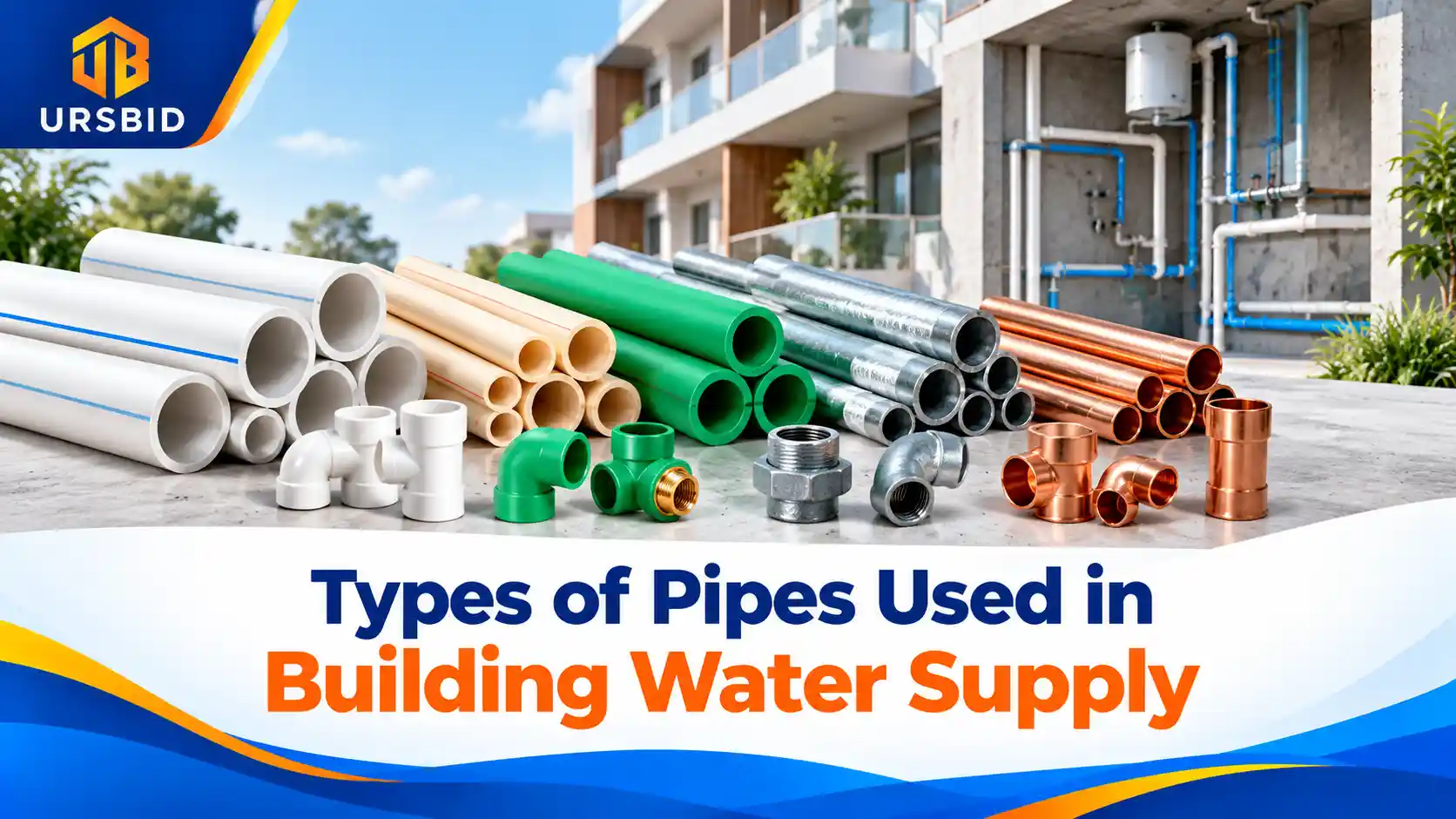
The main types of pipes used in building water supply are uPVC, CPVC, PPR, HDPE, GI, copper, and PEX. Each has its own temperature limit and best use.
- uPVC. The common cold water pipe. Cheap, strong, and corrosion-free. Joined with solvent cement.
- CPVC. A heat-resistant upgrade of PVC for both hot and cold water. Joined with solvent cement.
- PPR. A polypropylene pipe for hot and cold water. Joined by heat fusion welding.
- HDPE. A tough, flexible pipe for underground lines and large mains. Joined by heat fusion.
- GI (galvanised iron). An old metal pipe. Rusts and scales over time. Now mostly avoided in new indoor work.
- Copper. Very durable and safe for drinking water, but costly.
- PEX. A flexible pipe for concealed runs. Still limited in use in India.
CPVC vs uPVC Pipes: What Is the Difference?
CPVC handles hot water. uPVC does not. The one big difference is heat: uPVC softens above about 60°C, while CPVC is rated up to about 93°C.
CPVC is made by adding chlorine to PVC, which makes it more heat-resistant. uPVC is cheaper and good for cold water lines, drainage, and borewell casing. Running hot water through uPVC will deform the pipe and loosen the joints over time. CPVC can carry both hot and cold water, so many homes useCPVC pipes for the full indoor system.
Do not join CPVC and uPVC directly without proper transition fittings. Mixing pipe types casually is a common cause of leaks.
Note that some IS 15778 guides quote CPVC at 82°C for continuous service, while others quote 93°C. Check the rating printed on the pipe and pack.
Are PPR Pipes for Hot Water a Good Choice?
Yes. PPR pipes for hot water work well and are rated up to about 95°C. They last long, but they need a special fusion welding machine to install.
PPR pipes are joined by heat welding, so a plumber needs a power source and a welding tool on site. This extra step is one reason many builders choose CPVC instead. PPR also tends to cost about 10% to 20% more than CPVC. Even so, PPR is popular in many parts of North India for hot water lines. Makers claim very long service life, but treat that as a manufacturer claim and ask about the warranty.
Which Pipes for Underground Water Supply Should You Use?
HDPE is the best choice for underground water supply. It is tough, flexible, and joined by heat fusion, so the joints are very strong.
Soil moves, and buried pipes face weight and moisture. HDPE bends a little with ground movement and does not rust. GI pipes were used for underground lines in the past, but they can corrode, especially near the coast where salty water attacks them. For lines inside the building, use CPVC, uPVC, or PPR instead. Use HDPE for the buried mains between the street, the sump, and the building.
Which Pipe Should You Use for Each Part of the Building?
Pick the pipe by what the line carries and where it runs. Hot lines need CPVC or PPR. Cold lines can use uPVC. Buried lines need HDPE.
|
Part of the building |
Good pipe choice |
|
Cold water from the overhead tank |
uPVC or CPVC |
|
Hot water from the geyser |
CPVC or PPR |
|
Drinking water lines |
CPVC or copper |
|
Terrace and tank connections in sun |
CPVC |
|
Underground mains and sump lines |
HDPE |
|
Concealed and flexible runs |
PEX, where available |
|
New indoor lines |
Avoid GI |
What Do Pipe Standards and Prices Look Like?
Each pipe type has its own Indian Standard and its own price range. Check the IS code on the pipe before you buy.
|
Pipe |
IS code |
Temperature limit |
Price per metre (Rs, approx.) |
|
uPVC |
IS 4985 |
Up to 60°C |
60 to 150 |
|
CPVC |
IS 15778 |
Up to 93°C |
120 to 280 |
|
PPR |
IS 15801 |
Up to 95°C |
100 to 220 |
|
HDPE |
IS 4984 |
Up to 60°C to 70°C |
80 to 200 |
|
GI |
IS 1239 |
High |
180 to 350 |
Prices depend on the pipe size, pressure class, brand, and city, so treat the price column as a guide. Always compare quotes for the same size and class. CPVC is often the most cost-effective choice for a mixed hot and cold system.
What Mistakes Should You Avoid When Choosing Water Supply Pipes?
Do not use uPVC for hot water. It softens above about 60°C and the joints fail.
Do not mix pipe materials without proper fittings. Use the right transition fittings, and keep one material through each line where you can.
Do not use GI for new indoor plumbing. It rusts, scales, and can spoil the taste of the water.
Do not skip the pressure class. Check the SDR or class on the pipe, so it matches the pressure your tank or pump creates.
Do not hire an untrained plumber for PPR or HDPE. Fusion welding needs skill. You can findwater supply and sanitary work services on URSBID.
Do not accept pipes without the IS mark. Look for the BIS standard number printed on the pipe.
Where Can You Buy Water Supply Pipes Online?
You can buy water supply pipes online through URSBID by posting your requirement and getting quotes from verified suppliers.
Once you know the pipe types and sizes for each line, the next step is to compare rates. ToBuy Water Supply Pipes Online through URSBID, share the pipe material, size, pressure class, length, and delivery place. Registered vendors will send their quotations directly to you. Ask each one for the IS code and the warranty before you decide.
Frequently Asked Questions
What are the types of pipes used in building water supply?
The main types are uPVC, CPVC, PPR, HDPE, GI, copper, and PEX. CPVC and PPR suit hot water, uPVC suits cold water, and HDPE suits underground lines.
What is the difference between CPVC and uPVC pipes?
CPVC can carry hot and cold water, up to about 93°C. uPVC is for cold water and drainage, and softens above about 60°C.
Which pipe is best for hot water supply?
CPVC and PPR are the best choices. Both are made for hot water. CPVC is joined with solvent cement, while PPR needs heat fusion welding.
Which pipe is best for underground water supply?
HDPE is the best choice for buried lines. It is flexible, does not rust, and is joined by strong heat fusion joints.
Can I use GI pipes for new plumbing?
It is better not to. GI rusts and scales over time. Plastic pipes like CPVC and uPVC have replaced it in most new homes.
Final Thoughts
There is no single best pipe for a whole building. Use CPVC or PPR for hot water, uPVC for cold water, and HDPE for buried lines. Avoid GI in new indoor work. Check the IS code, the temperature rating, and the pressure class. Then your pipes will be out of sight, and out of mind, for years.
Ready to compare prices?Get water supply pipe rates on URSBID by posting your requirement, and receive quotes from verified suppliers.