Watch a concrete pour on any construction site and you'll see small plastic or concrete pieces clipped onto the steel reinforcement before the concrete truck even arrives. Most visitors walk right past them without a second glance. They cost almost nothing compared to the cement and steel around them. Yet these small pieces, cover blocks, decide how long the entire structure will actually last.
This guide explains what a concrete cover block is, why it matters so much for durability, and what to check before your site uses them.
What Is a Concrete Cover Block?
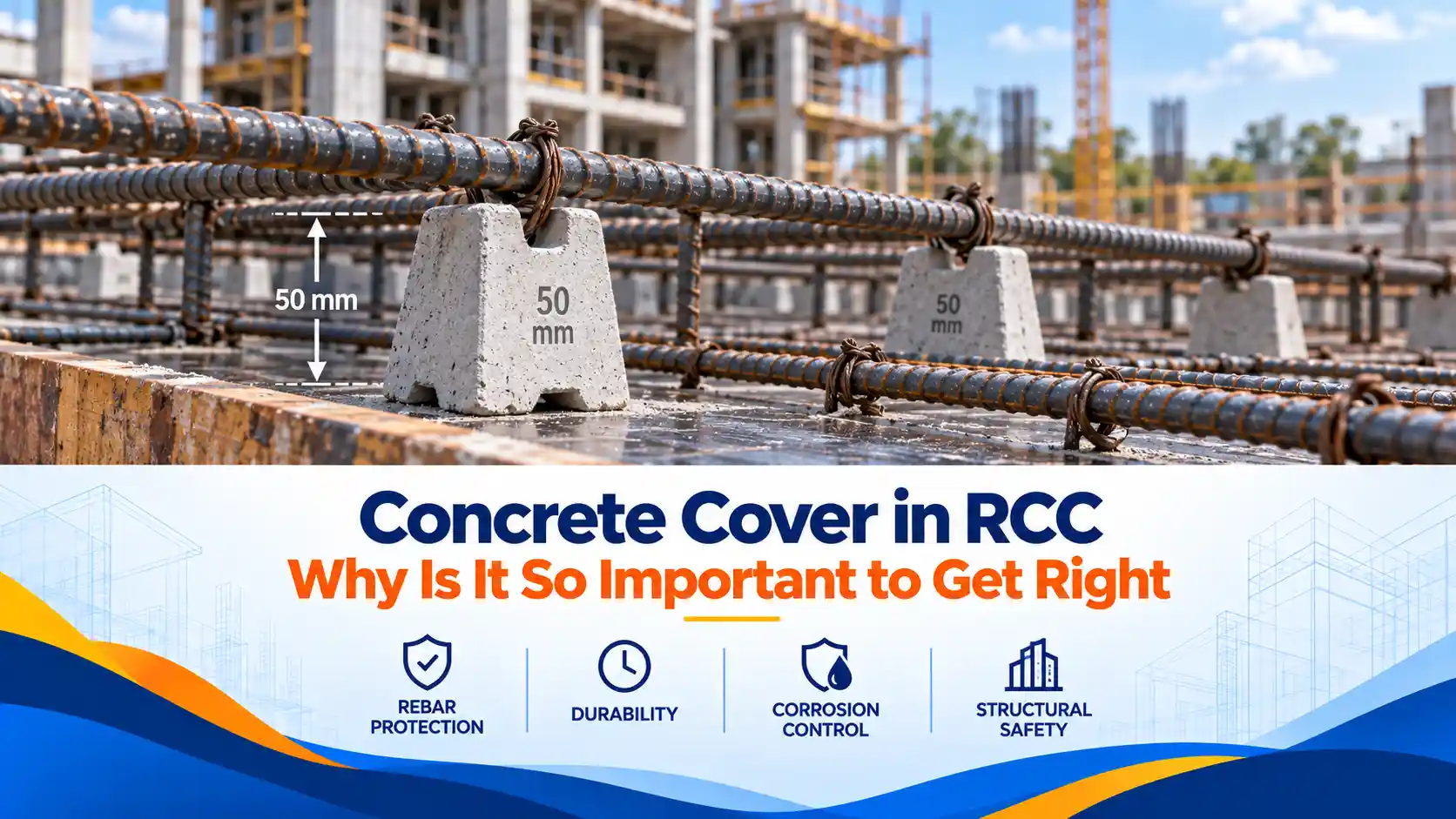
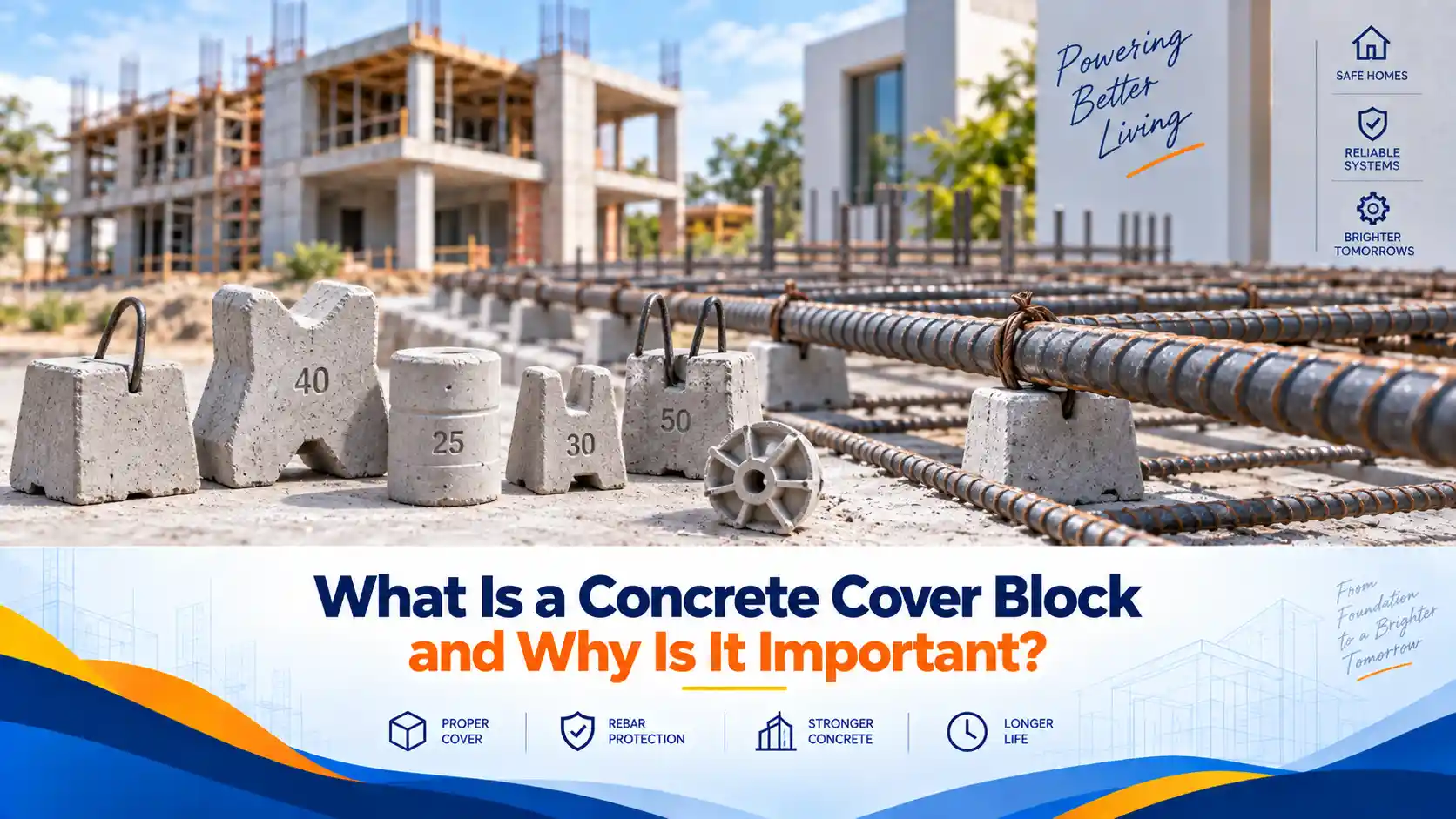
A concrete cover block is a small spacer placed between the steel reinforcement bars and the formwork before concrete is poured. It holds the rebar at a fixed distance from the outer surface of the concrete, so the steel ends up properly embedded once the pour is finished.
Without a cover block, rebar can sag, shift, or touch the formwork directly during the pour. Once that happens, the steel sits too close to the surface, or even gets exposed, and the concrete cover in RCC work that's supposed to protect it simply isn't there anymore.
Why Does Concrete Cover in RCC Work Actually Matter?
Concrete cover matters because it's the only thing standing between the steel reinforcement and the outside world, protecting it from moisture, air, and chemical attack that cause rust.
Steel corrodes when it's exposed to oxygen and moisture. As rust forms, it expands, and that expansion cracks the surrounding concrete from the inside. Once concrete starts cracking near the surface, water gets in faster, corrosion speeds up, and the whole cycle accelerates. This is one of the leading causes of premature structural failure in reinforced concrete buildings, and it's largely preventable with something as simple as correctly placed cover blocks. A recent Nomura report estimated that corrosion costs India close to ₹14 lakh crore a year, about 4.3% of GDP, a huge share of which comes from exactly this kind of preventable structural damage. (Data source:Business Standard, "India builds long-life infra, but corrosion remains a costly weak link", 2026.)
What Are the Common Cover Block Sizes Used in Construction?
Cover block sizes generally range from 20mm to 75mm, with the right size depending on the structural element and how exposed it is to weather or chemical attack.
- 20mm to 25mm is typical for internal beams, columns, and slabs that aren't directly exposed to weather.
- 40mm to 50mm is common for footings, external columns, and elements exposed to the outside environment.
- 50mm to 75mm is used for structures facing severe exposure, like foundations in contact with soil, coastal construction, or industrial environments with chemical exposure.
Indian construction standards, particularly IS 456, define minimum cover requirements based on the type of structural element and its exposure condition, which a structural engineer factors into the building's design rather than leaving to guesswork on site.
Is a Cover Block the Same as a Rebar Spacer?
Yes, cover block and rebar spacer are generally used to mean the same thing, though the terms sometimes describe slightly different shapes for the same job.
Both terms refer to the small piece placed between rebar and formwork to maintain the correct concrete cover. "Cover block" is more common in Indian construction and usually refers to a precast concrete cube or disc. "Rebar spacer" is a broader term that also includes plastic spacers, wheel-shaped spacers, and other shapes designed for the same purpose. Plastic spacers are lighter and easier to place in large quantities, while concrete cover blocks share the same material properties as the surrounding pour, which some engineers prefer for consistent thermal expansion.
What Materials Are Cover Blocks Made From?
- Precast concrete cover blocks are made from a matching or higher-grade concrete mix, so they expand and contract at the same rate as the surrounding pour, reducing the risk of cracking at the block's edges.
- Plastic cover blocks are lightweight, quick to place, and commonly used for smaller residential projects where speed and cost matter more than matching thermal properties exactly.
- Fibre-reinforced cover blocks combine concrete with fibre reinforcement for added strength, often used in heavier infrastructure projects with demanding load and durability requirements.
What Mistakes Should You Avoid With Cover Blocks?
Don't skip cover blocks to save a small amount of money. Compared to the cost of repairing corrosion-damaged concrete years later, cover blocks are one of the cheapest forms of insurance available on a construction site.
Don't use the wrong size for the exposure condition. A cover block sized for an internal beam won't provide enough protection for a foundation in contact with soil, where moisture exposure is constant.
Don't space cover blocks too far apart. If the distance between blocks is too wide, the rebar can still sag between them under the weight of the wet concrete, defeating the purpose even with the right blocks in place.
Where Can You Buy Materials for Your RCC and Reinforcement Work?
You can buy reinforcement materials online through URSBID by posting your requirement and getting quotes from verified suppliers.
Since cover blocks work alongside your main reinforcement, it helps to plan both together. Toget TMT steel bar rates through URSBID, describe your requirement and registered vendors send their quotations directly, so you can compare pricing for the reinforcement your structure actually needs.
If you're also hiring a team for the reinforcement installation itself, checkingreinforcement work services on the same platform keeps your material and labour sourcing aligned on the same timeline.
Frequently Asked Questions
What is the purpose of a concrete cover block? A concrete cover block holds rebar at the correct distance from the formwork, ensuring the steel gets the right amount of concrete cover once the pour is complete, which protects it from corrosion and structural failure.
What cover block size should I use for a foundation? Foundations typically need a larger cover, generally in the 50mm range or more depending on soil exposure, since they sit in constant contact with ground moisture, which increases corrosion risk compared to internal structural elements.
Are plastic or concrete cover blocks better? Concrete cover blocks match the surrounding pour's thermal expansion properties, which some engineers prefer for consistency, while plastic cover blocks are lighter and faster to place, making them a popular choice for smaller residential projects.
What happens if cover blocks are not used in construction? Without cover blocks, rebar can sag or touch the formwork directly, leaving it under-protected or exposed once the concrete cures, which significantly increases the risk of corrosion and early structural damage.
Is there a standard for concrete cover requirements in India? Yes, IS 456 specifies minimum concrete cover requirements based on the type of structural element and its exposure condition, and a structural engineer typically accounts for this during the building's design.
Final Thoughts
Concrete cover blocks are one of the smallest, cheapest items on a construction site, and also one of the easiest to overlook. But the difference between a structure that lasts its full design life and one that starts showing corrosion damage within a decade often comes down to exactly this kind of detail, correctly sized, correctly spaced, and never skipped to save a little money upfront.
Ready to source reinforcement materials for your project?Get TMT steel bar rates on URSBID by posting your requirement, and receive quotes from verified suppliers for your RCC work.