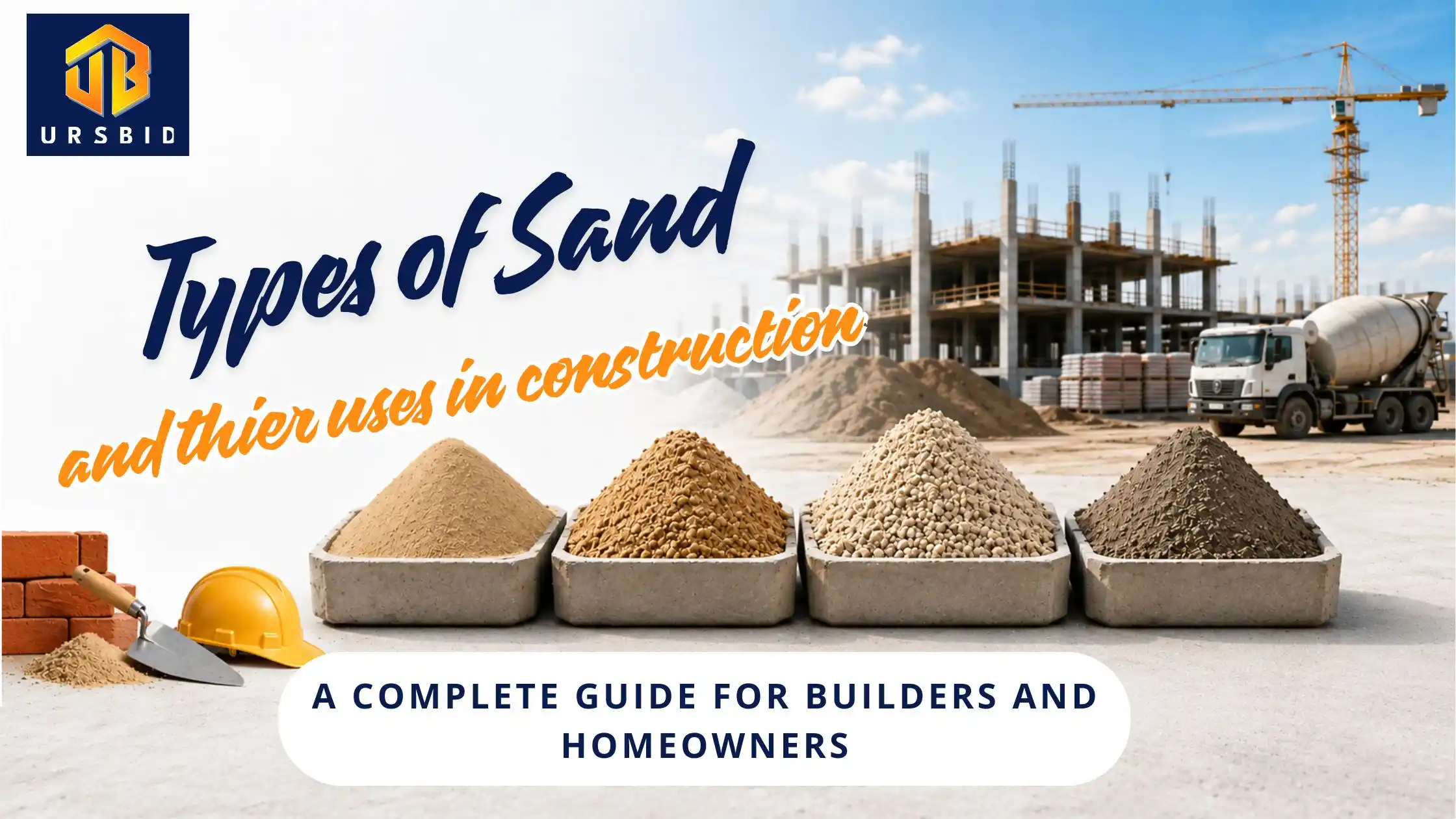
When planning a construction project, most people focus on cement, steel, bricks, and labor costs. However, one of the most important materials often gets overlooked—sand.
Ask any experienced contractor, and they'll tell you that choosing the wrong type of sand can lead to poor plastering, weak concrete, cracks in walls, and even structural issues over time.
Whether you're building your dream home, managing a commercial project, or sourcing materials as a contractor, understanding the different types of sand and their uses can save both money and future headaches.
In this guide, we'll explore the various types of sand used in construction, their applications, advantages, and practical insights from real construction sites.
Why Sand Is Important in Construction
Sand plays a crucial role in construction by:
- Filling gaps between aggregates
- Improving concrete strength
- Enhancing mortar workability
- Providing smooth plaster finishes
- Increasing durability of structures
Without quality sand, even the best cement and steel cannot deliver optimal performance.
Types of Sand Used in Construction
1. River Sand
River sand is naturally occurring sand collected from river beds and banks. It is one of the most widely used sands in construction due to its smooth texture and excellent binding properties.
Characteristics
- Fine and smooth particles
- Naturally washed by flowing water
- Free from excessive salts
- Good workability
Common Uses
- Brick masonry work
- RCC concrete structures
- Plastering
- Flooring applications
Human Experience
Many experienced masons still prefer river sand for plastering because it provides a smoother finish and requires less effort during application. Homeowners often notice fewer surface cracks when quality river sand is used.
Advantages
✔ Excellent binding strength
✔ Smooth finish
✔ Low impurity content
✔ High durability
Disadvantages
❌ Increasing cost
❌ Environmental restrictions on mining
❌ Limited availability in some regions
2. Manufactured Sand (M Sand)
Manufactured Sand, commonly called M Sand, is produced by crushing hard granite stones into fine particles.
Due to restrictions on river sand mining, M Sand has become one of the most popular alternatives in modern construction.
Characteristics
- Uniform particle size
- Produced under controlled conditions
- Consistent quality
- Environment-friendly option
Common Uses
- RCC concrete
- Brickwork
- Blockwork
- Residential construction
- Commercial projects
Human Experience
A contractor working on a residential township project shared that switching to M Sand helped reduce material wastage because of its consistent grading. The concrete mix became more predictable, resulting in better quality control.
Advantages
✔ Cost-effective
✔ Easily available
✔ Sustainable choice
✔ Higher compressive strength in concrete
Disadvantages
❌ Quality varies between manufacturers
❌ Requires proper grading and washing
3. Concrete Sand
Concrete sand is a coarse type of sand specifically designed for concrete production.
It is usually made from crushed stone and processed to meet construction standards.
Common Uses
- Concrete mixtures
- Foundation work
- Pavements
- Road construction
Advantages
✔ Excellent strength
✔ Improves concrete durability
✔ Better drainage properties
Human Experience
Builders often use concrete sand for foundations because it creates a stronger base and reduces settlement issues over time.
4. Plaster Sand
Plaster sand is fine-grained sand specially prepared for plastering walls and ceilings.
Its smooth texture helps achieve an even surface finish.
Common Uses
- Wall plastering
- Ceiling finishing
- Decorative surfaces
Advantages
✔ Smooth finish
✔ Better adhesion
✔ Easier application
Human Experience
A common mistake many homeowners make is using coarse sand for plastering. This often results in rough wall surfaces that require additional putty and finishing work, increasing overall project costs.
5. Pit Sand
Pit sand is obtained from natural pits excavated from the ground.
It has sharp, angular grains that provide strong binding properties.
Characteristics
- Reddish color
- Coarse texture
- Excellent cohesion
Common Uses
- Masonry work
- Foundation construction
- Mortar preparation
Advantages
✔ Strong binding
✔ Suitable for structural work
✔ Readily available in some regions
Disadvantages
❌ Requires cleaning before use
❌ May contain impurities
6. Fill Sand
Fill sand is used primarily for filling purposes rather than structural construction.
It contains larger particles and may not meet standards required for concrete or plastering.
Common Uses
- Filling low-lying areas
- Landscaping
- Backfilling trenches
- Ground leveling
Human Experience
Site engineers often use fill sand before foundation work to level uneven plots and improve site preparation.
7. Utility Sand?
Utility sand is a versatile construction sand used in various non-structural applications.
Common Uses
- Pipe bedding
- Landscaping
- Paver installation
- Utility works
Advantages
✔ Affordable
✔ Multi-purpose
✔ Easy availability
River Sand vs M Sand: Which Is Better?
This is one of the most common questions asked by homeowners.
| Feature | River Sand | M Sand |
|---|---|---|
| Availability | Limited | Easily Available |
| Cost | Higher | Lower |
| Quality Consistency | Moderate | High |
| Environmental Impact | High | Low |
| Concrete Strength | Good | Excellent |
| Plaster Finish | Excellent | Good |
Expert Recommendation
For most modern residential and commercial projects, high-quality M Sand is becoming the preferred choice due to its availability, consistency, and environmental benefits.
However, river sand still remains popular for premium plastering and finishing work where available.
How to Identify Good Quality Sand
Before purchasing sand, check the following:
Color
Clean sand should have a natural appearance without excessive clay or organic matter.
Grain Size
Uniform particle size ensures better workability and strength.
Impurity Check
Avoid sand containing:
- Clay lumps
- Organic waste
- Excessive dust
- Salts
Silt Content
High silt content reduces concrete strength and bonding capacity. A simple field test is to place sand in a transparent bottle with water. Excessive settling of mud or clay indicates poor quality.
Tips for Buying Sand from a Construction Material Supplier
When purchasing sand:
✔ Verify the supplier's reputation
✔ Ask about the source of sand
✔ Request quality certifications if available
✔ Compare rates from multiple suppliers
✔ Ensure proper transportation and storage
Platforms like URSBID help homeowners, builders, and contractors connect with reliable construction material suppliers, making it easier to source quality materials at competitive prices.
FAQs About Sand and Their Types
Which sand is best for house construction?
M Sand is widely preferred for concrete and masonry because of its consistent quality, while River Sand is often chosen for premium plastering where available.
Can M Sand replace River Sand?
Yes. High-quality M Sand can replace River Sand in most residential and commercial construction projects.
What is the difference between River Sand and Pit Sand?
River Sand is naturally smooth and suitable for plastering and concrete, while Pit Sand has angular particles that provide stronger bonding for masonry work.
Which sand gives stronger concrete?
Properly graded M Sand and Concrete Sand generally provide higher compressive strength than low-quality River Sand.
Final Thoughts
Sand may look like a simple material, but it plays a vital role in the strength, durability, and appearance of any construction project.
Choosing the right type of sand for the right application can improve construction quality, reduce maintenance costs, and ensure long-term structural performance.
Whether you are building a home, managing a large project, or sourcing materials as a contractor, understanding the differences between River Sand, M Sand, Concrete Sand, Plaster Sand, and Pit Sand will help you make smarter decisions.
At URSBID, you can connect with trusted construction material suppliers and service providers to find the right materials for your next project and ensure your construction starts with a strong foundation.