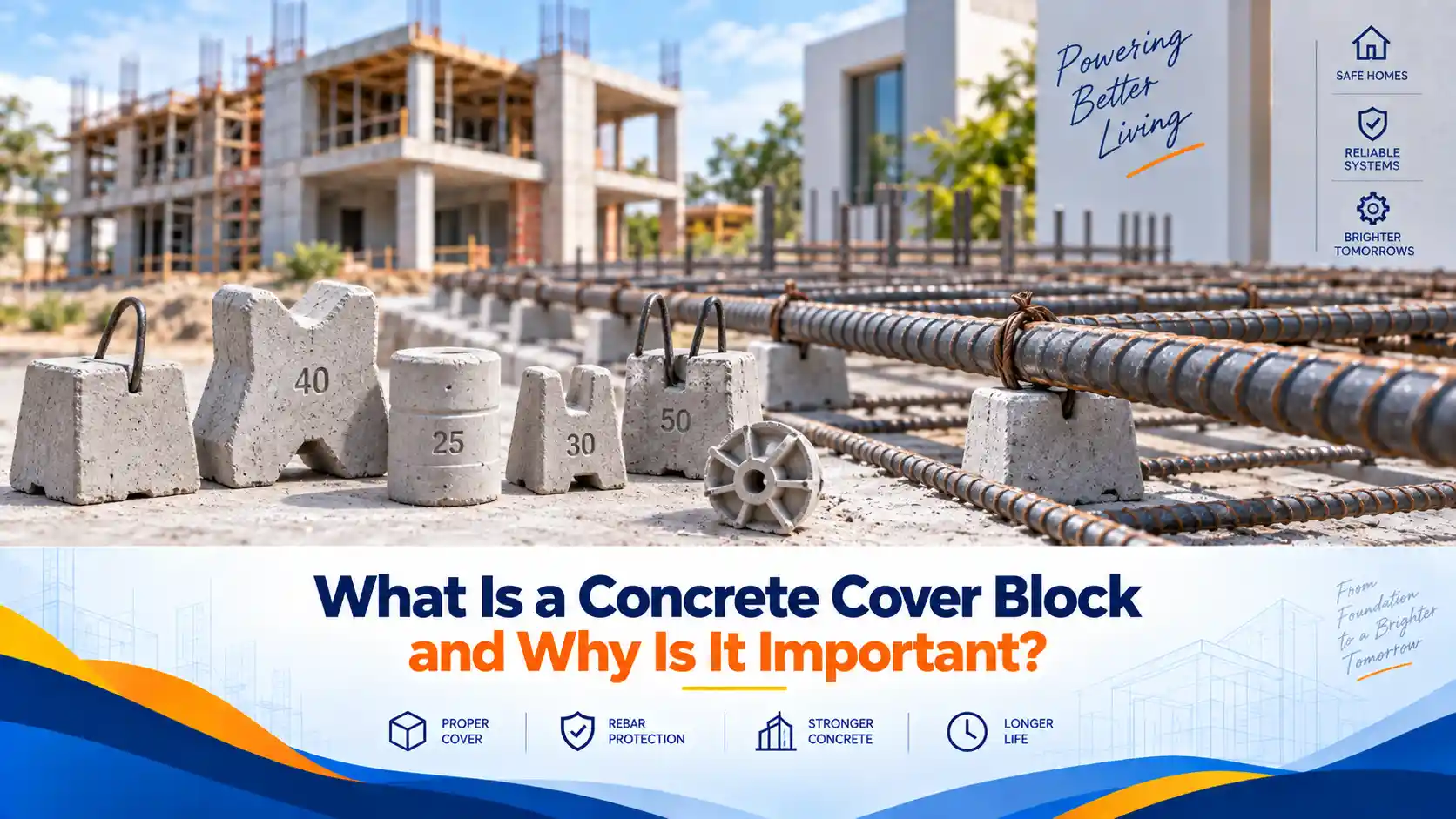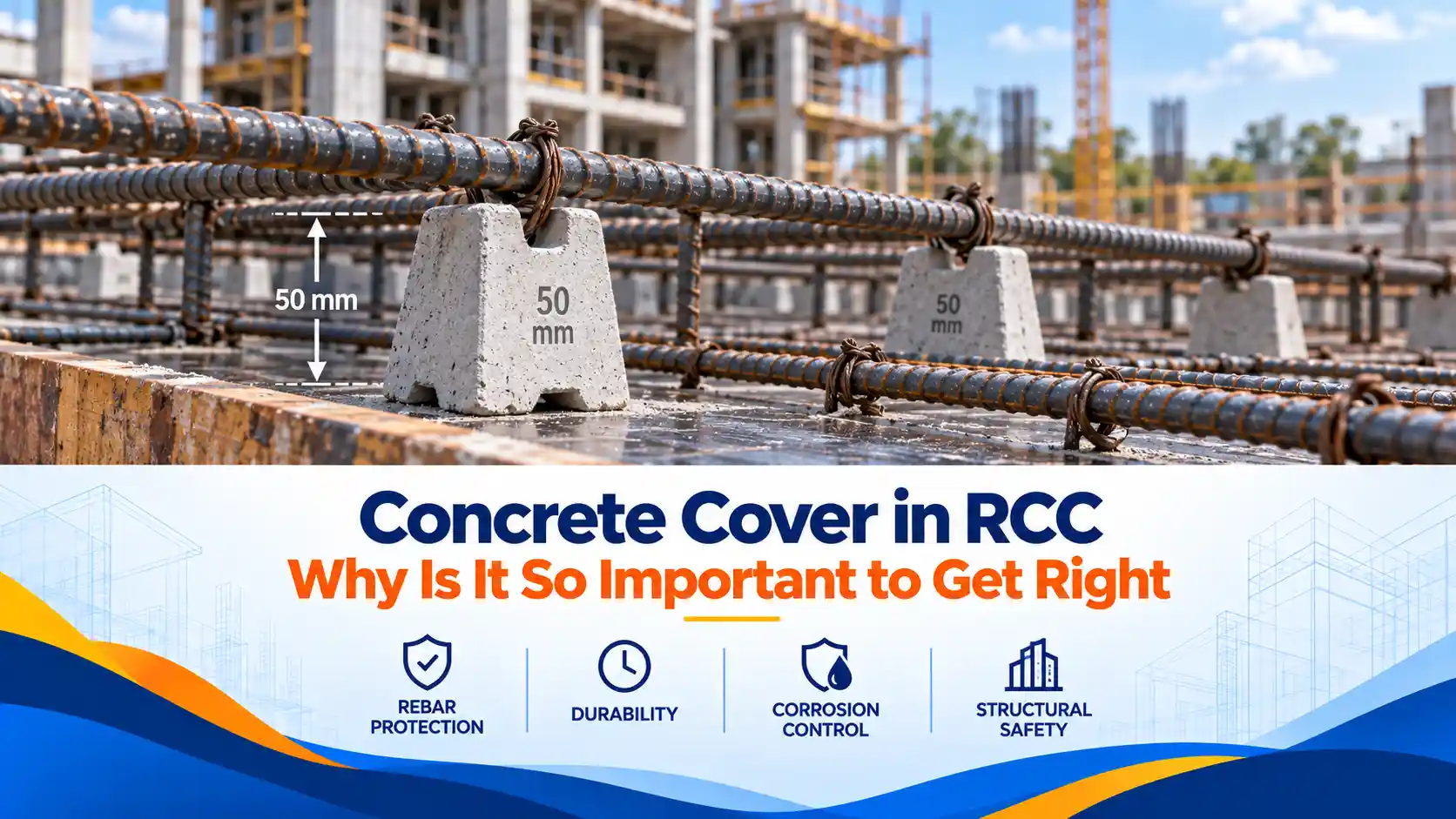
Ask a site engineer what "cover" means and most people picture a small spacer clipped to a rebar cage. That's the physical tool. But concrete cover itself is a design number, decided long before any spacer is placed, and it's one of the few values in a structural drawing that quietly controls how long the entire building survives. Get the cover thickness wrong, even by a few millimetres in the wrong direction, and the consequences don't show up on day one. They show up ten or twenty years later, as cracks, rust stains, and repair bills nobody budgeted for.
This guide looks at concrete cover in RCC from the design side, what decides the required thickness, what IS 456 actually specifies, and what goes wrong structurally, not just cosmetically, when cover is insufficient.
What Exactly Is Concrete Cover in RCC?
Concrete cover is the distance between the outer surface of a reinforced concrete member and the nearest surface of the embedded steel reinforcement. It's measured in millimetres and specified separately for every structural element in a building's drawings.
This number isn't arbitrary. It's calculated based on the environment the structure will face, the fire resistance it needs to provide, and the size of the reinforcement bars themselves. Two buildings using identical grades of concrete and steel can require completely different cover thickness if one sits in a dry inland city and the other faces a coastal, salt-laden atmosphere.
What Are the IS 456 Cover Requirements for Different Exposure Conditions?
IS 456 sets minimum nominal cover based on five exposure categories, ranging from 20mm for mild exposure up to 75mm for extreme exposure.
Indian Standard IS 456:2000, the code of practice governing plain and reinforced concrete construction in India, defines exposure conditions as follows, along with their minimum nominal cover under Table 16:
- Mild exposure (surfaces protected from weather, non-coastal): 20mm
- Moderate exposure (most sheltered exterior surfaces): 30mm
- Severe exposure (surfaces facing driving rain, alternate wetting and drying): 45mm
- Very severe exposure (coastal environments, direct exposure to sea air): 50mm
- Extreme exposure (tidal zones, direct contact with aggressive chemicals): 75mm
These are minimums, not targets to design toward exactly. IS 456 also allows a small reduction, generally 5mm, for higher-grade concrete (M35 and above) under severe and very severe conditions, since denser, higher-grade concrete already resists moisture penetration better on its own.
How Does Concrete Cover Thickness Affect Fire Resistance?
Concrete cover thickness directly affects how long a structural member can withstand fire before the embedded steel loses enough strength to risk collapse.
Steel loses much of its structural strength at high temperatures, and concrete cover is what delays heat from reaching the reinforcement during a fire. IS 456's Table 16A specifies minimum cover requirements tied to specific fire resistance ratings, measured in hours, separate from the exposure-based table used for durability. A column designed for a two-hour fire rating needs more cover than the same column designed only for durability against weather exposure, which is why fire safety requirements sometimes push the required cover above what exposure conditions alone would demand.
What Happens When Concrete Cover Is Too Thin or Too Thick?
Cover that's too thin lets moisture, air, and chemicals reach the reinforcement faster, accelerating corrosion and cracking the concrete from the inside as rust expands around the steel.
But cover that's too thick creates a different problem: it increases the distance between the surface and the reinforcement's actual structural contribution, which can affect crack width control and, in extreme cases, the member's calculated bending capacity. IS 456 generally allows the actual cover to exceed the specified nominal cover by up to 10mm, but not fall below it, which is why site supervision during the pour, making sure spacers hold the rebar cage in the correct position, matters just as much as getting the design number right on paper.
How Do Engineers Decide the Right Cover for a Structural Element?
Engineers decide cover thickness by combining the exposure condition, the required fire rating, and the diameter of the reinforcement bar being used, then applying whichever value is highest.
For reinforcement in tension, IS 456 specifies that cover should not be less than the bar's diameter or a fixed minimum, whichever is greater, so a structure using larger diameter bars in a given exposure condition may need more cover than one using smaller bars in the exact same environment. This is one reason cover values differ between a slab's thin reinforcement and a column's heavier main bars even within the same building.
What Mistakes Happen With Concrete Cover on Real Sites?
Cover gets reduced during the pour more often than most people expect, usually because the rebar cage shifts against the formwork under the weight and pressure of fresh concrete, especially when spacers are too few or improperly placed.
Site teams sometimes also apply a uniform cover value across an entire building without adjusting for genuinely different exposure conditions between, say, an internal beam and an external parapet wall facing monsoon rain directly. Treating cover as a single fixed number rather than an element-by-element decision is a common and avoidable oversight.
Where Can You Source Materials for Correctly Reinforced RCC Work?
You can buy reinforcement materials online through URSBID by posting your requirement and getting quotes from verified suppliers.
Getting concrete cover right starts with the right reinforcement steel for your structural design. Toget TMT steel bar rates through URSBID, describe your requirement and registered vendors send their quotations directly, so you can compare pricing for the exact grade and size your drawings specify.
If you also need ready-mix or baggedcement for the pour itself, requesting that quote alongside your steel keeps your RCC material procurement on a single, coordinated timeline.
Frequently Asked Questions
What is the minimum concrete cover required for RCC as per IS 456? IS 456 specifies a minimum nominal cover of 20mm for mild exposure conditions, increasing up to 75mm for extreme exposure, with the exact value depending on the element's environmental exposure and required fire resistance.
Why does concrete cover matter for durability? Concrete cover is the primary barrier protecting reinforcement steel from moisture, air, and chemical attack, all of which cause corrosion that expands and cracks the surrounding concrete from the inside if the cover is insufficient.
Does bar diameter affect the required concrete cover? Yes, IS 456 requires cover to be at least equal to the reinforcement bar's diameter or a specified minimum value, whichever is greater, meaning larger bars can require more cover even under the same exposure condition.
Can concrete cover be too thick? Yes, excessive cover can affect crack width control and, in significant cases, a structural member's calculated capacity, which is why IS 456 generally limits actual cover to no more than 10mm above the specified nominal value.
How is fire resistance related to concrete cover requirements? Concrete cover delays heat from reaching embedded steel during a fire, and IS 456's Table 16A sets separate minimum cover values tied to specific fire resistance ratings, which can require more cover than durability requirements alone.
Final Thoughts
Concrete cover in RCC isn't a single number picked once and applied everywhere. It shifts with exposure condition, fire rating, and bar diameter, and getting it right, on paper and during the actual pour, is one of the clearest examples of how a small design detail protects decades of a building's structural life. The spacers on site are just the tool. The real decision happens in the structural design long before that.
Ready to source reinforcement and concrete materials for your project?Get TMT steel bar rates on URSBID by posting your requirement, and receive quotes from verified suppliers for your RCC work.