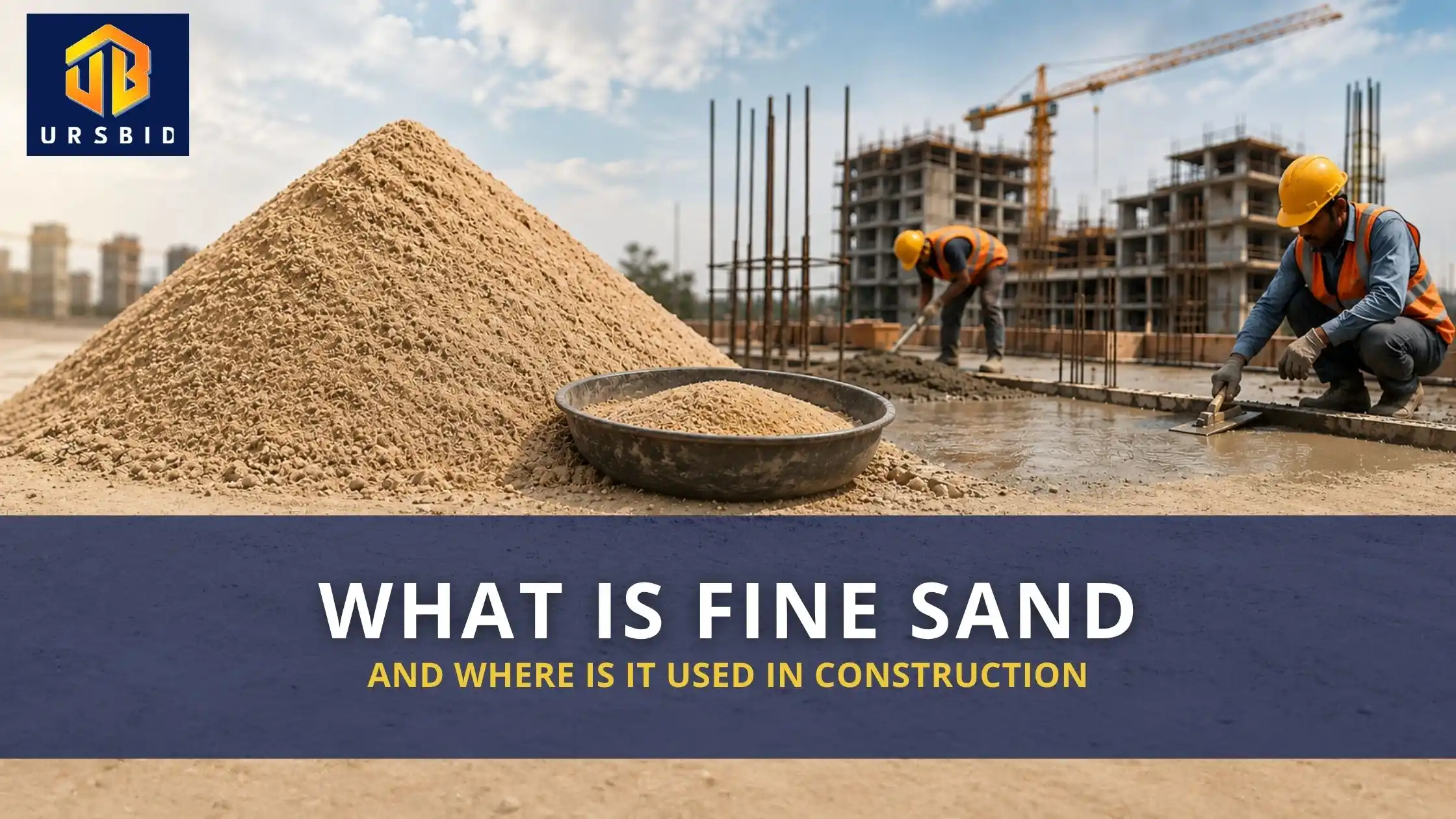
Run your hand across a freshly plastered wall and a polished floor, and you're feeling the result of the same basic material doing very different jobs depending on how it's graded. That smooth, even finish isn't an accident of good workmanship alone, it starts with using the right sand in the first place. Use the wrong grade, and no amount of skilled trowel work will hide the difference.
Fine sand is the material behind that smoothness. It's easy to overlook next to bigger-ticket materials like cement and steel, but getting it wrong is one of the more common — and more avoidable, reasons: plastering cracks, floors feel uneven, or finish work looks patchy within a year. This guide covers exactly what fine sand is, where it belongs on a construction site, and what to check before you buy it.
What Is Fine Sand?
Fine sand is a naturally occurring or processed granular material with noticeably smaller particles than coarse sand, generally falling below 2.0 mm in size. It has a smoother, softer texture that makes it easier to work into an even, uniform layer — which is exactly why it's the standard choice wherever a smooth surface finish matters more than raw structural strength.
Good-quality fine sand should be clean and free of clay, silt, and organic debris, just like its coarser counterpart. The difference isn't really in the cleanliness standard — it's in the particle size and the type of work that size is suited for.
Fine Sand vs. Coarse Sand: Why the Distinction Matters
It's worth being clear about this, since the two are frequently mixed up on smaller sites:
- Fine sand: Smaller particles (under 2.0 mm), smooth texture, ideal for plastering, flooring, and finish-level work.
- Coarse sand: Larger, rougher particles (2.0-4.75 mm), better suited to concrete and structural mortar where strength matters more than surface smoothness.
Using coarse sand for plastering leaves a rough, uneven surface that's difficult to finish properly, while using fine sand in a structural concrete mix reduces the mix's strength since it doesn't interlock as firmly with cement and aggregate. Knowing which one your work actually calls for is the first quality decision on any finishing job.
Where Fine Sand Is Used in Construction
1. Plastering Walls and Ceilings
This is fine sand's most common application. When mixed with cement in the right ratio, its smooth particles allow a plasterer to achieve an even, crack-resistant surface that's ready for painting or further finishing. Plaster mixed with coarse or poorly graded sand tends to develop a rougher texture and is more prone to surface cracking as it cures.
2. Flooring and Screed Work
Before tiles or other flooring materials go down, a leveling screed layer is typically laid using fine sand mixed with cement. This screed needs to be smooth and consistent to give the finished flooring, whether it's tiles or another surface material — a stable, even base to sit on.
3. Brickwork and Blockwork Joint Finishing
While coarse sand handles the structural mortar in load-bearing brickwork, fine sand is often used for the finishing pass on joints where a neater, smoother appearance is wanted, particularly on exposed brick or block surfaces meant to be seen rather than plastered over.
4. Masonry Pointing Work
Pointing — the process of finishing or repairing the visible mortar joints between bricks or stones, relies on fine sand for the same reason as joint finishing: it produces a cleaner, tighter surface than coarse sand would.
5. Decorative and Finish-Level Concrete Work
Where concrete surfaces are meant to be exposed and visually finished rather than covered, fine sand is sometimes blended into the surface layer to achieve a smoother texture, while the structural body of the concrete still relies on coarse sand and aggregate underneath.
What Fine Sand Is Not Ideal For
Just as with coarse sand, knowing where fine sand doesn't belong is just as useful:
- Structural concrete mixes: Foundations, columns, beams, and slabs need coarse sand's interlocking strength, fine sand alone weakens the mix.
- Load-bearing mortar: Structural brickwork mortar needs coarse sand's bonding strength, not fine sand's smoothness.
- Backfilling and compaction work: Fine sand doesn't compact and drain as reliably as coarse sand, making it a poor choice for trench backfilling or ground leveling before construction.
How to Check Fine Sand Quality Before Buying
A few practical checks help separate good-quality fine sand from substandard stock before it ends up in your plaster or screed mix:
1. The Silt Content Test
Take a sample in a clear bottle, add water, shake it, and let it settle. A visible layer of silt on top after settling indicates excess silt content, which weakens the bond between sand and cement — ideally, silt content should stay under 3-4% for construction-grade fine sand.
2. Texture and Cleanliness Check
Good fine sand should feel smooth and free of clay lumps or visible organic matter. If it feels sticky when wet or forms clumps easily, that's usually a sign of clay contamination that will affect how the plaster or screed cures.
3. Uniformity of Grading
Fine sand that's inconsistently graded — a mix of very fine dust and slightly coarser particles — tends to produce an uneven finish. Reasonably uniform grading within the fine range gives a more predictable, smoother result.
4. Source and Type Verification
Fine sand is available from a few different sources — natural river sand, processed plaster sand, and manufactured fine sand (a byproduct of M-sand production). Each behaves slightly differently, so it's worth confirming with your supplier exactly which type you're buying, especially for larger orders where consistency across batches matters.
Fine Sand and India's Shifting Sand Supply
Like coarse sand, natural fine sand sourcing has become more regulated in many Indian states due to environmental restrictions on river sand mining. This has pushed the market toward manufactured and processed alternatives, particularly plaster sand produced specifically to meet fine-grading standards for wall and ceiling work. For buyers, this makes it more important to confirm exactly what's being supplied — natural river-sourced fine sand and manufactured plaster sand aren't always interchangeable in terms of workability, even when both fall within the "fine sand" category.
Buying Fine Sand Online Through a Verified Marketplace
Sourcing fine sand through an unfamiliar local dealer makes it hard to compare quality, pricing, or supplier legitimacy before a bulk order arrives on site. On URSBID, you can browse fine sand listings directly, post your quantity and grading requirements, and receive competitive quotes from verified suppliers instead of relying on a single local source's stock and pricing.
Since plastering and flooring work usually involves more than one material, it's worth checking coarse sand requirements for the structural portion of the same project in the same sourcing pass, keeping your material procurement consistent and verified across a single platform rather than vetting a separate supplier for each item.
For a broader comparison of sand types beyond fine and coarse — including M-sand, pit sand, and river sand — URSBID's guide on types of sand used in construction covers the full picture in more depth.
Frequently Asked Questions
What is fine sand used for in construction? Fine sand is primarily used for plastering walls and ceilings, flooring screed layers, and finish-level masonry work like pointing and joint finishing, where a smooth surface matters more than structural strength.
What is the particle size of fine sand? Fine sand generally has a particle size under 2.0 mm, giving it a smoother, softer texture compared to coarse sand's 2.0-4.75 mm range.
Can fine sand be used in concrete? Fine sand isn't suitable as the primary sand for structural concrete mixes, since it doesn't interlock as strongly with cement and aggregate as coarse sand does. It's occasionally blended into decorative surface layers, but the structural body still relies on coarse sand.
How do I check if fine sand is good quality before buying? Run a simple silt settling test, check for clay lumps or organic contamination by touch, and confirm the grading is reasonably uniform — excess silt or inconsistent grading both affect how well plaster or screed cures.
Is plaster sand the same as fine sand? Plaster sand is a type of fine sand specifically processed and graded for plastering work, but not all fine sand is prepared to the same standard — it's worth confirming with your supplier which specific type you're being sold, especially for larger orders.
Final Thoughts
Fine sand rarely gets discussed with the same seriousness as cement or steel, but it's directly responsible for how a finished wall, floor, or exposed masonry surface actually looks and holds up over time. Matching the right grade to the right job, and checking basic quality markers before a bulk order arrives, is a small step that prevents a much more visible problem later — cracked plaster or an uneven floor finish is hard to disguise once it's done.
If you're sourcing materials for an upcoming finishing job, browse verified fine sand suppliers on URSBID and compare quotes before placing your order.