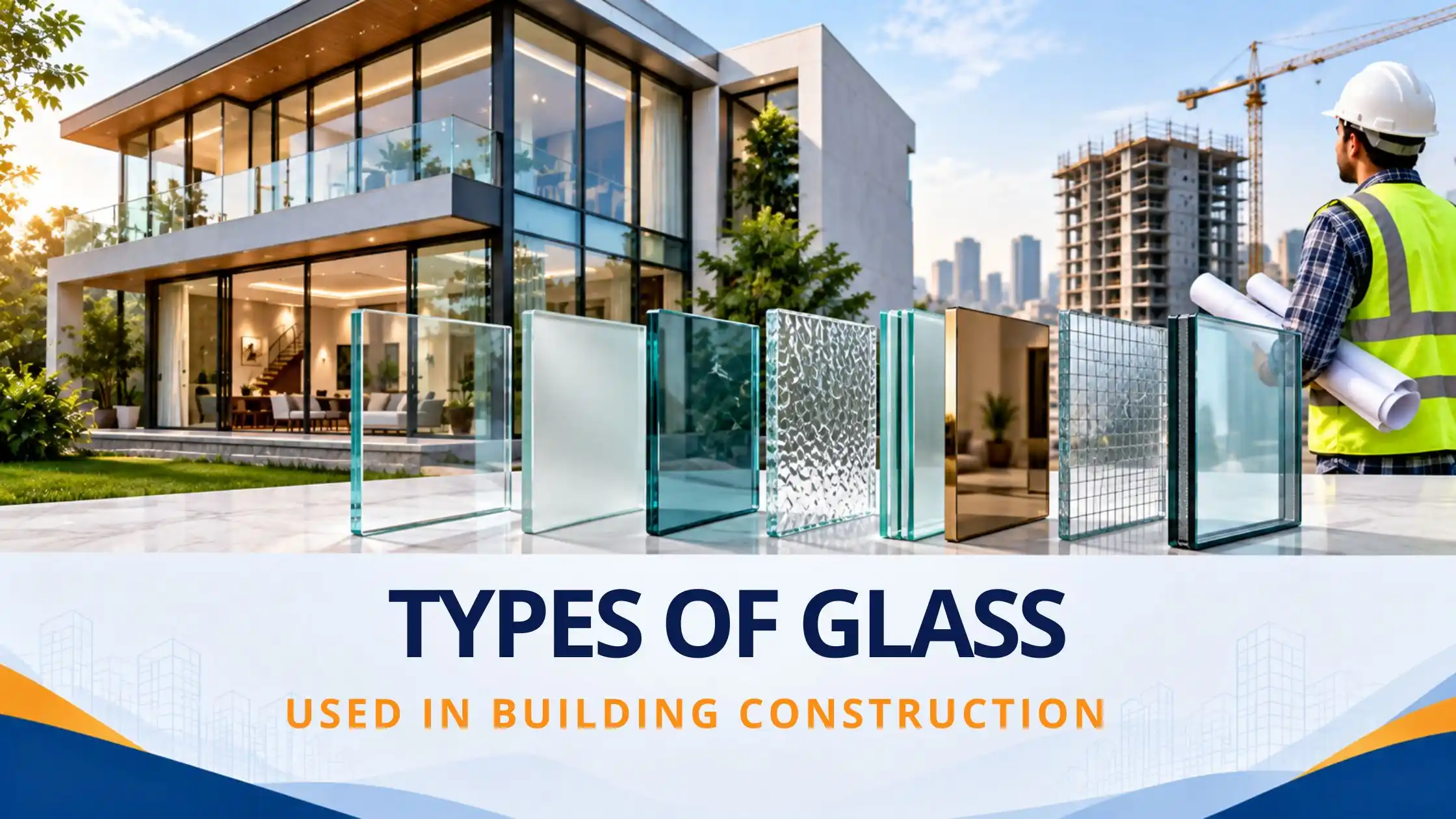
The types of glass used in building construction vary according to where the glass is installed and what purpose it needs to serve. A simple window may need clear glass for daylight and visibility, while a balcony, bathroom, façade or skylight may need glass with additional safety, privacy or thermal properties.
Glass is now an important part of residential and commercial construction. It is used in windows, doors, partitions, façades, railings, bathrooms, skylights and decorative interiors. Modern construction glass can provide much more than transparency. Depending on the type, it can improve safety, control heat, reduce glare, provide privacy and enhance the appearance of a building.
The important part is choosing the right glass for the right location. Understanding the major building glass types can help homeowners, builders and contractors prepare better specifications and compare suppliers before buying.
What are the main types of glass used in building construction?
The main types of glass used in building construction include float glass, toughened glass, laminated glass, tinted glass, reflective glass, Low-E glass, insulated glass, frosted glass and fire-resistant glass. Each has different properties and applications, so one type should not be used for every part of a building.
Float Glass
Float glass is a basic form of flat glass widely used in the construction industry. It has a smooth surface and provides clear visibility. It is commonly used for ordinary windows, mirrors and interior applications where specialised safety or thermal performance is not required.
Float glass is also the base material from which several other marble types—no, glass types—are processed, including toughened, laminated and coated glass. When buying it for a building, consider the location carefully because ordinary float glass may not be appropriate for areas where impact or breakage presents a safety risk.
Toughened Glass
Toughened glass, also called tempered glass, is processed using controlled heating and cooling to increase its strength compared with ordinary annealed glass. Its strength and breakage characteristics make it a popular choice for areas where safety is important.
It is commonly used for glass doors, shower enclosures, office partitions, shopfronts and several architectural applications. You will also find it in many modern residential and commercial buildings where larger glass panels are required.
Cutting, drilling and major edge work normally need to be completed before toughening. This makes accurate measurements important when placing an order.
Laminated Glass
Laminated glass consists of two or more glass layers bonded with an interlayer. When the glass breaks, the interlayer helps keep the broken pieces together instead of allowing them to fall away immediately.
This makes laminated glass useful in locations where post-breakage retention is important. Depending on the project design, it can be considered for skylights, canopies, façades, windows and railings.
Some laminated glass configurations can also help with sound reduction. However, performance depends on the thickness, interlayer and overall glass configuration. Buyers should therefore compare specifications rather than relying only on the term “laminated glass.”
Tinted Glass
Tinted glass is manufactured with colour that changes its appearance and affects the amount of visible light and solar energy passing through it. Grey, bronze, green and blue are among the shades commonly seen in buildings.
It is often used for exterior windows, doors and façades. Tinted glass can also complement the architectural style of a building while helping manage strong sunlight.
Colour alone should not determine your choice. If heat control is important, ask the supplier for the product's technical performance rather than assuming that darker glass will automatically perform better.
Reflective Glass
Reflective glass has a coating that gives its surface a reflective appearance and can help control solar radiation. It is especially common in commercial buildings with large glazed façades.
Apart from its functional role, reflective glass creates a distinctive exterior appearance. This is why it is often used in offices, shopping complexes, hotels and modern commercial projects.
Different reflective glasses allow different amounts of light and solar energy to pass through. The choice should therefore consider the building's orientation, glazing area and required indoor comfort.
Low-E Glass
Low-E stands for low emissivity. This glass has a specialised coating designed to reduce radiative heat transfer through the glazing while still allowing useful daylight into the building.
Low-E glass is commonly considered for energy-conscious homes, offices, hotels and other air-conditioned buildings. It can be particularly useful for large exterior windows and façades where heat transfer through glazing is an important concern.
Low-E glass is available in different performance levels. Before buying, compare technical specifications and choose a product that suits the building's climate, orientation and design.
Insulated Glass
Insulated glass consists of two or more glass panes separated by a sealed space. The space between the panes helps improve thermal insulation compared with basic single glazing.
It is widely used in offices, hotels, premium homes and commercial buildings where indoor temperature control is important. Insulated glazing can also combine other building glass types, such as Low-E or solar-control glass, to achieve specific performance requirements.
When comparing insulated glass, look beyond the number of panes. The type of glass, coating, spacer, cavity and complete unit construction all influence its performance.
Frosted and Patterned Glass
Frosted and patterned glass are commonly used where privacy is required without completely blocking natural light. Instead of providing a clear view, these glass types diffuse or distort visibility through the panel.
Bathrooms are one of the most common applications. They are also used for office cabins, internal partitions, entrance doors and decorative areas.
Different patterns provide different levels of privacy. If privacy is important, check the glass under actual lighting conditions before placing a large order.
Fire-Resistant Glass
Fire-resistant glass is a specialised glazing product designed for locations where the building's fire-safety plan requires tested fire performance. It may be used in fire-rated doors, partitions, corridors and other designated areas.
It should not be confused with ordinary toughened glass. Fire-resistant glazing is generally part of a complete tested system that can include the glass, frame, seals and other components.
For this reason, the glass should follow the approved fire-safety specification for the project rather than being selected only on price or appearance.
Which type of glass is best for different building areas?
The best glass depends on where it will be installed. Windows generally focus on daylight, visibility and heat control, while doors and bathrooms need greater attention to safety. Façades, skylights and balconies can have more demanding performance requirements.
The following comparison provides a practical starting point:
|
Building Area |
Glass Commonly Considered |
Main Requirement |
|
Windows |
Float, tinted, Low-E or insulated glass |
Light and heat control |
|
Glass doors |
Toughened safety glass |
Safety and appearance |
|
Bathrooms |
Toughened and frosted glass |
Safety and privacy |
|
Office partitions |
Toughened, laminated or frosted glass |
Safety and privacy |
|
Façades |
Reflective, Low-E, laminated or insulated glazing |
Heat, appearance and performance |
|
Skylights |
Suitable laminated safety glazing |
Daylight and safety |
|
Balconies |
Designed safety glazing |
Safety and visibility |
|
Shops/showrooms |
Toughened or laminated glass |
Visibility and safety |
|
Fire-rated areas |
Fire-resistant glazing |
Fire protection |
These are general applications. Safety-critical areas such as façades, balcony railings and overhead glazing should follow the project's architectural or engineering specification.
What should you consider before buying construction glass?
Before buying construction glass, consider its intended use, safety requirements, glass type, thickness, dimensions, processing, thermal performance and price. A clear specification makes it much easier to compare quotations from different suppliers.
Start with the application. A bathroom partition, exterior window and balcony railing should not automatically receive the same glass simply because the required dimensions are similar.
Next, check the complete product specification. A quotation mentioning only “10 mm glass” does not explain whether the product is float, toughened, laminated or coated. Ask for the exact type, thickness, dimensions, quantity and required processing.
Measurements are especially important for processed glass. Holes, cut-outs, edge finishing and hardware locations should be confirmed before fabrication.
Price should be compared only after confirming that suppliers are quoting for the same specification. A cheaper quotation is not necessarily better if the glass type, processing or dimensions are different.
If you are sourcing glass for a current project, you can exploreconstruction glass on URSBID and post your requirement for quotations.
How can URSBID help you buy construction glass?
URSBID helps buyers post construction glass requirements and receive bids from sellers who supply the required material. This gives buyers an opportunity to compare quotations rather than depending on only one supplier.
A buyer can mention the glass type, dimensions, thickness, quantity, project location and other important requirements while posting an enquiry onURSBID. Relevant sellers can view the requirement and place their bids.
The buyer can then compare the received bids and check seller information before deciding whom to contact. This approach can be particularly useful for contractors, builders and homeowners purchasing glass for an active construction project.
URSBID also provides an opportunity for glass suppliers to connect with buyers. Sellers can register their businesses, add their products and service areas, check relevant enquiries and bid when a matching requirement becomes available.
If the project requires installation as well as material, buyers can also exploreGlass Work services on URSBID to find relevant service providers.
How do you choose the right glass for your building?
Choose glass according to application and performance first, then compare appearance and price. The cheapest glass is not always the right choice, and the most expensive glass is not automatically necessary for every location.
For ordinary windows, daylight and visibility may be the main priorities. Bathrooms require privacy and suitable safety glazing. Exterior windows may need better solar and thermal performance. Skylights, balconies and façades require greater attention to safety and the overall glazing design.
Before buying, make a clear list of what the glass needs to achieve. Decide whether safety, privacy, heat control, appearance, sound reduction or another requirement is most important.
Once the specification is clear, compare products and quotations from different suppliers. This helps you evaluate similar products instead of comparing prices for completely different glass specifications.
Frequently Asked Questions About Building Glass Types
What are the most common types of glass used in building construction?
The common types include float glass, toughened glass, laminated glass, tinted glass, reflective glass, Low-E glass, insulated glass, frosted glass and fire-resistant glass. The correct choice depends on where and how the glass will be used.
Which glass is best for building construction?
There is no single glass that is best for every part of a building. Windows, doors, bathrooms, façades, balconies and skylights have different requirements. The glass should be selected according to its application.
What is the difference between toughened and laminated glass?
Toughened glass is heat-treated to improve its strength and breakage behaviour. Laminated glass contains an interlayer that helps retain broken pieces after breakage. The appropriate choice depends on the safety requirement and application.
Which type of glass is commonly used for windows?
Float glass can be used for basic windows, while tinted, Low-E, laminated and insulated glass may be considered when additional solar, thermal or safety performance is needed.
Which glass is suitable for bathrooms?
Toughened glass is commonly used for shower enclosures and bathroom partitions because safety is important in these areas. Frosted or patterned glass can be used when additional privacy is required.
Which construction glass can help reduce heat?
Low-E, solar-control, reflective, tinted and insulated glazing can help manage heat depending on the product and building design. Compare actual performance specifications before choosing.
What types of glass are used for building façades?
Building façades can use reflective, Low-E, toughened, laminated and insulated glazing, often in different combinations. The exact specification depends on the façade design and performance requirements.
Is laminated glass suitable for skylights?
Laminated safety glazing is commonly considered for overhead applications because its interlayer can help retain glass after breakage. The exact specification should follow the requirements of the individual project.
Where can I buy construction glass online?
Buyers can post their requirements on URSBID and receive bids from relevant construction glass sellers. This allows them to compare quotations and seller information before proceeding with a purchase.
What details should I provide when requesting a glass quotation?
Mention the glass type, thickness, dimensions, quantity, coating or finish, required holes or cut-outs, edge processing, project location and intended application. Providing complete information helps suppliers submit more accurate quotations.
Conclusion
The types of glass used in building construction serve different purposes. Float glass is suitable for many basic applications. Toughened and laminated glass are commonly considered where safety matters. Frosted glass provides privacy, while Low-E, reflective and insulated glass can help address heat and energy-performance requirements.
Start by deciding where the glass will be installed and what it needs to achieve. Then compare the right building glass types, specifications and supplier quotations.
For material requirements, you canbuy construction glass through URSBID by posting your requirement and receiving bids from relevant sellers. If installation is also required, exploreGlass Work services to connect with service providers for your project.