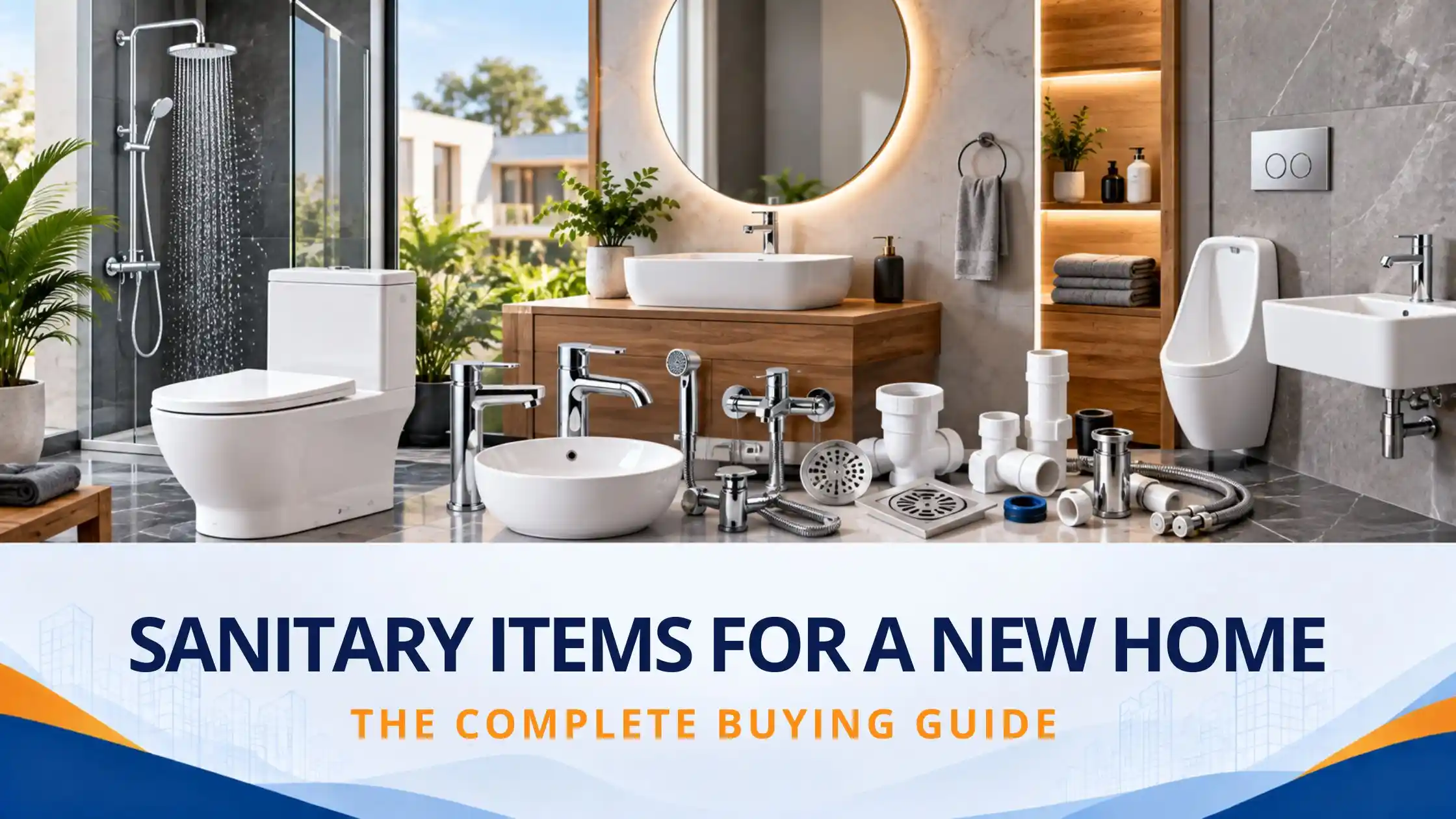
Bathroom shopping usually happens last in a home build, and it shows. After months of decisions about cement, steel, and tiles, most people walk into a sanitaryware showroom tired, rushed, and ready to just pick something that looks fine. That's how homes end up with a toilet that's too tall for the kids, a basin tap that starts leaking within a year, or a shower fitting that doesn't match anything else in the room.
Sanitary items are easy to underestimate because they're small compared to the rest of a build. But they're also the fittings you touch every single day, so getting them right matters more than their size suggests. This guide covers the main types of sanitary items for a new home, what to check before buying, and how to avoid the common mistakes.
Types of Toilets (WCs) for a New Home
- One-piece toilets combine the bowl and tank in a single unit. They look sleek, are easier to clean since there's no gap between tank and bowl, and generally cost more than two-piece models.
- Two-piece toilets have a separate tank and bowl. They cost less, are easier to transport and install, and remain the most common choice in Indian homes.
- Wall-mounted toilets hang off the wall with the tank hidden inside it, leaving the floor clear for easier cleaning. They need a concealed cistern built into the wall during construction, so this choice has to be planned early, not decided at the last minute.
- Floor-mounted toilets sit directly on the floor and don't need any special wall preparation, which makes them the simpler, more budget-friendly option for most homes.
Types of Wash Basins for a Bathroom
- Pedestal basins stand on a floor-mounted pedestal that also hides the plumbing underneath. They suit bathrooms with enough floor space and a classic look.
- Wall-hung basins mount directly onto the wall with no visible support, giving a cleaner, more modern appearance and easier floor cleaning underneath.
- Counter-top basins sit on top of a vanity counter, offering more storage space below and a popular choice in modern bathroom designs.
- Under-counter basins mount beneath the counter surface for a seamless look, though they need a solid, well-fitted counter to work properly.
What Material Should Bathroom Fittings and Sanitaryware Be Made Of?
Most bathroom fittings and sanitaryware in Indian homes are made from vitreous china or ceramic, since both resist stains, are easy to clean, and hold up well over years of daily use.
Vitreous china is a dense, glazed ceramic used for toilets, basins, and sinks. It has a very low water absorption rate, which keeps it from staining or developing cracks over time the way lower-grade ceramic can. Stainless steel shows up mainly in kitchen sinks and some modern basin designs, valued for its durability and resistance to chipping, though it shows water spots more visibly than ceramic. For taps, showers, and other fittings, brass with a chrome finish remains the standard, offering a good balance of strength, corrosion resistance, and a polished look that holds up under daily use.
How Do You Choose the Right Faucets and Shower Fittings?
Choose faucets and shower fittings based on water pressure at your home and how much daily wear the fixture will see, not just how they look in the showroom.
Low water pressure homes need faucets and shower heads designed to work well at lower flow, since a premium rain shower head looks impressive but performs poorly without enough pressure behind it. High-traffic fittings, like a family bathroom's main basin tap, benefit from a more durable build even if it costs a bit more, since a budget tap in constant daily use tends to develop leaks and stiffness faster than one built for that level of use. Matching finishes across a bathroom, taps, shower fittings, and accessories in the same tone, also avoids the mismatched look that happens when items get bought separately over time.
How Big Is India's Bathroom Fittings and Sanitaryware Market
India's bath fittings market was valued at around USD 12.36 billion in 2026, and it's projected to grow to nearly USD 17.97 billion by 2031, at a yearly growth rate of close to 7.7%. This growth is coming from rising urban housing demand, more renovation activity, and a clear shift toward premium, spa-style bathroom designs even outside major metro cities. Within that broader market, ceramic sanitaryware itself is also growing steadily, driven by rising disposable incomes and greater awareness of hygiene and bathroom design among Indian homeowners. (Market data source:Mordor Intelligence India Bath Fittings Market Report, 2026.)
For buyers, this growth means more brands and price tiers to choose from than a decade ago, which makes comparing quotes directly more useful than settling for a single showroom's recommendation.
What Mistakes Should You Avoid When Buying Sanitary Items?
Don't decide on a wall-mounted toilet or concealed shower fitting after the walls are already built. These need plumbing planned into the wall structure itself, so the decision has to happen early, alongside your plumbing layout, not during a last-minute showroom visit.
Don't buy fittings purely by matching them individually to a photo. Bring a sample or photo of your tile and wall colour to the shop, since a fitting that looks great alone can clash badly once it's actually installed in the room.
Don't skip checking the warranty and after-sales support for taps and flush systems specifically, since these are the components most likely to need a spare part or repair a few years down the line, and not every brand supports that easily.
Where Can You Buy Sanitary Items Online in India?
You can buy sanitary items online through URSBID by posting your requirement and getting quotes from verified suppliers.
Once you've decided on your toilet type, basin style, and fitting material, the next step is finding a supplier who can deliver consistent quality at a fair price. Toget sanitary item rates through URSBID, describe what your bathroom needs and registered vendors send their quotations directly, so you can compare real pricing instead of relying on one local shop's stock.
If your project also needs the pipes and fittings that connect to these sanitary items, it's worth requesting both quotes together, since plumbing and sanitaryware are usually installed on the same timeline.
Frequently Asked Questions
What sanitary items are needed for a new home? A new home typically needs toilets (WCs), wash basins, faucets, shower fittings, and bathroom accessories like towel rails and soap holders, with the exact list depending on the number of bathrooms and their layout.
Which is better, a one-piece or two-piece toilet? One-piece toilets look sleeker and are easier to clean since there's no gap between the tank and bowl, while two-piece toilets cost less and remain the more common choice in most Indian homes.
What is the best material for bathroom fittings? Vitreous china is the standard for toilets and basins due to its low water absorption and stain resistance, while brass with a chrome finish is the standard for taps and showers, offering durability and a polished look.
Can I install a wall-mounted toilet in any bathroom? Not without planning ahead. Wall-mounted toilets need a concealed cistern built into the wall during construction, so this decision has to be made early in the building process, not after the walls are finished.
How do I make sure my bathroom fittings match each other? Choose fittings in the same finish, like matte black, chrome, or brushed gold, and buy taps, showers, and accessories together or with a sample in hand, rather than matching them individually from memory.
Final Thoughts
Sanitary items don't need to be the last, rushed decision in a home build. Knowing the toilet and basin types available, choosing the right material for daily wear, and planning wall-mounted fittings early enough to fit the plumbing layout all make the difference between a bathroom that works well for years and one with recurring small repairs. A little planning here goes a long way, since these are the fittings your household will use every single day.
Ready to source fittings for your new home?Get sanitary item rates on URSBID by posting your requirement, and receive quotes from verified suppliers for toilets, basins, faucets, and more.