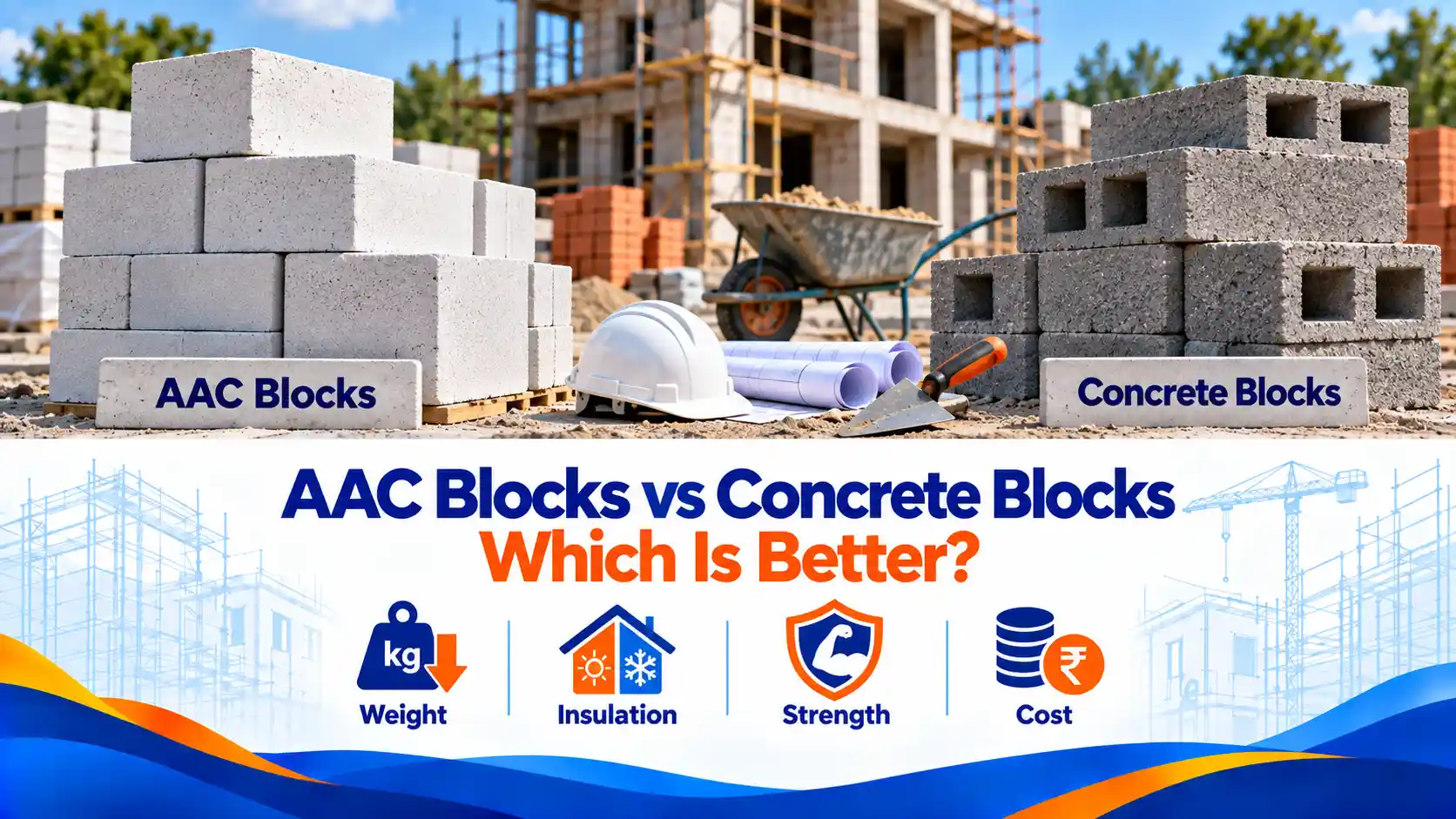
A site engineer comparing a pallet of AAC blocks against a stack of solid concrete blocks will notice the difference before reading a single spec sheet, one gets lifted with one hand, the other needs both. That weight difference isn't incidental. It cascades into everything else, foundation load, construction speed, insulation, and cost, which is exactly why this comparison keeps coming up for anyone choosing wall material for a new build.
This guide puts AAC blocks and concrete blocks head to head across the factors that actually decide which one fits your project.
What Is the Core Difference Between AAC Blocks and Concrete Blocks?
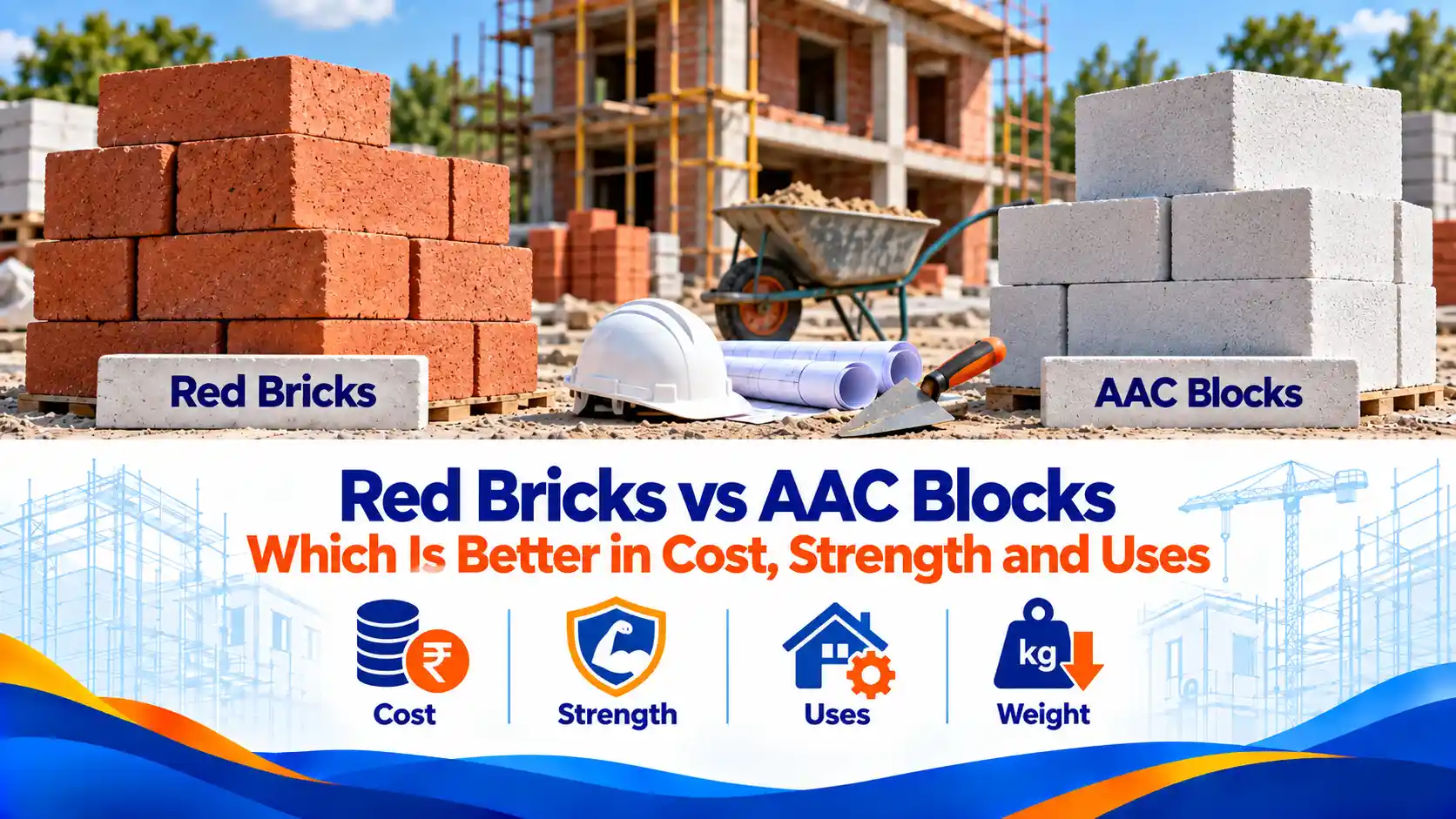
AAC blocks are made from an aerated, autoclaved mix of cement, lime, and fly ash or sand, giving them a porous, lightweight structure, while concrete blocks are a denser, solid or hollow-cast mix of cement, aggregate, and water.
That structural difference is the root of almost every other distinction between them. AAC's aerated composition traps air throughout the block, cutting its weight dramatically compared to solid concrete while also giving it genuine thermal insulation properties that plain concrete simply doesn't have. Concrete blocks, being denser and more solid, trade that lightness for higher raw compressive strength and a lower material cost per unit.
How Do AAC Blocks Weight and Strength Compare to Concrete Blocks?
AAC blocks weigh significantly less than concrete blocks, often around one-fifth to one-quarter the density, though concrete blocks generally offer higher raw compressive strength for heavy load-bearing applications.
This weight difference is substantial enough to matter structurally, not just for ease of handling. A wall built with AAC blocks places noticeably less dead load on a building's foundation and structural frame, which can translate into a more economical foundation design, particularly for multi-storey construction. Concrete blocks, especially solid concrete blocks, deliver more raw strength per unit, which is why they remain the preferred choice for foundation-level masonry and heavily loaded walls, while AAC performs well within a framed structure where columns and beams carry the primary load.
AAC Blocks vs Concrete Blocks: Side-by-Side Comparison
|
Factor |
AAC Blocks |
Concrete Blocks |
|
Weight |
Very light |
Heavier, especially solid blocks |
|
Compressive strength |
Moderate, sufficient for framed structures |
Higher, suited to load-bearing walls |
|
Thermal insulation |
Strong, due to aerated structure |
Minimal on its own |
|
Construction speed |
Faster, larger units, less mortar |
Slower with solid blocks, moderate with hollow |
|
Water absorption |
Higher, needs proper waterproofing |
Lower, more moisture-tolerant |
|
Upfront cost |
Generally higher per unit |
Generally lower per unit |
|
Best for |
High-rise, insulation-focused builds |
Foundations, heavy load-bearing walls |
Which Block Is Better for Walls in Terms of Cost and Speed?
Concrete blocks are generally cheaper per unit, but AAC blocks often complete a wall faster due to their larger size and reduced mortar consumption, which can narrow the total cost gap once labour is included.
AAC blocks are considerably larger than standard concrete blocks, meaning fewer units are needed to cover the same wall area, and the thinner mortar joints used with AAC further cut both material and labour time. Concrete blocks, particularly hollow variants, still install reasonably quickly and remain cost-competitive for non-structural walls where AAC's insulation benefits aren't the priority. For a true comparison, it helps to calculate total installed wall cost, material plus mortar plus labour, rather than comparing per-unit prices alone, since AAC's speed advantage often offsets some of its higher upfront material cost.
How Big Is India's AAC Blocks Market Right Now
India's AAC blocks market was valued at around USD 3.62 billion in 2024 and is projected to reach USD 6.16 billion by 2030, growing at a yearly rate of about 9.1%. A significant part of this growth comes from AAC's larger, more uniform block size, which enables faster installation and can reduce labour and mortar costs by up to 30% compared to traditional block or brick construction. (Market data source:Research and Markets India Autoclaved Aerated Concrete Blocks Market Report, 2026.)
This rapid growth reflects a genuine shift in how Indian builders are weighing these two materials, not just marketing, and it's worth factoring into your own decision if long-term resale or green-building certification matters for your project.
What Mistakes Should You Avoid When Choosing Between These Blocks?
Don't choose AAC blocks for a wall without planning proper waterproofing. Their porous structure absorbs more water than concrete blocks, and skipping external waterproofing in humid or high-rainfall regions can lead to moisture problems over time.
Don't assume concrete blocks are always the cheaper overall choice just because the unit price is lower. Once labour, mortar consumption, and construction timeline are factored in, AAC can sometimes work out comparable or even cheaper on a per-wall basis.
Don't use AAC blocks as the primary load-bearing material for a very tall or heavily loaded structure without your structural engineer's sign-off. AAC performs well within a framed structure, but it isn't a direct substitute for the higher compressive strength concrete blocks offer in foundation-level or heavy load-bearing masonry.
Where Can You Buy AAC Blocks and Concrete Blocks Online?
You can buy AAC blocks and concrete blocks online through URSBID by posting your requirement and getting quotes from verified suppliers.
Once you've decided which block fits your project's structural role, budget, and timeline, the next step is finding a supplier who can deliver consistent quality at a fair price. Toget block rates through URSBID, describe your requirement, AAC or concrete, and the quantity you need, and registered vendors send their quotations directly, so you can compare pricing before committing to a single local dealer.
Frequently Asked Questions
Are AAC blocks better than concrete blocks? Neither is universally better. AAC blocks offer lighter weight, better insulation, and faster construction, while concrete blocks offer higher compressive strength and a lower unit cost, making the better choice dependent on the specific wall and budget.
Are AAC blocks as strong as concrete blocks? AAC blocks have lower raw compressive strength than solid concrete blocks, but they're structurally suitable for standard walls within a framed building, where columns and beams carry the primary load rather than the wall itself.
Do AAC blocks need extra waterproofing compared to concrete blocks? Yes, AAC blocks are more porous and absorb more water than concrete blocks, so proper external waterproofing is important, particularly in humid or high-rainfall regions, to prevent moisture-related issues.
Which is cheaper, AAC blocks or concrete blocks? Concrete blocks are generally cheaper per unit, but AAC blocks can reduce labour and mortar costs significantly due to their larger size, which sometimes narrows or closes the total installed cost gap between the two.
Can AAC blocks and concrete blocks be used together in the same building? Yes, many buildings use concrete blocks or solid masonry for load-bearing and foundation-level walls, then switch to AAC blocks for upper floors or partition walls where reduced weight and better insulation are more valuable.
Final Thoughts
AAC blocks and concrete blocks aren't competing to be the universal winner, they're suited to different roles within the same building. AAC brings weight savings, insulation, and construction speed, while concrete blocks bring raw strength and a lower unit cost, and the right choice often comes down to matching each to the specific wall it's going into rather than picking one material for the entire project.
Ready to source blocks for your build?Get AAC and concrete block rates on URSBID by posting your requirement, and receive quotes from verified suppliers.