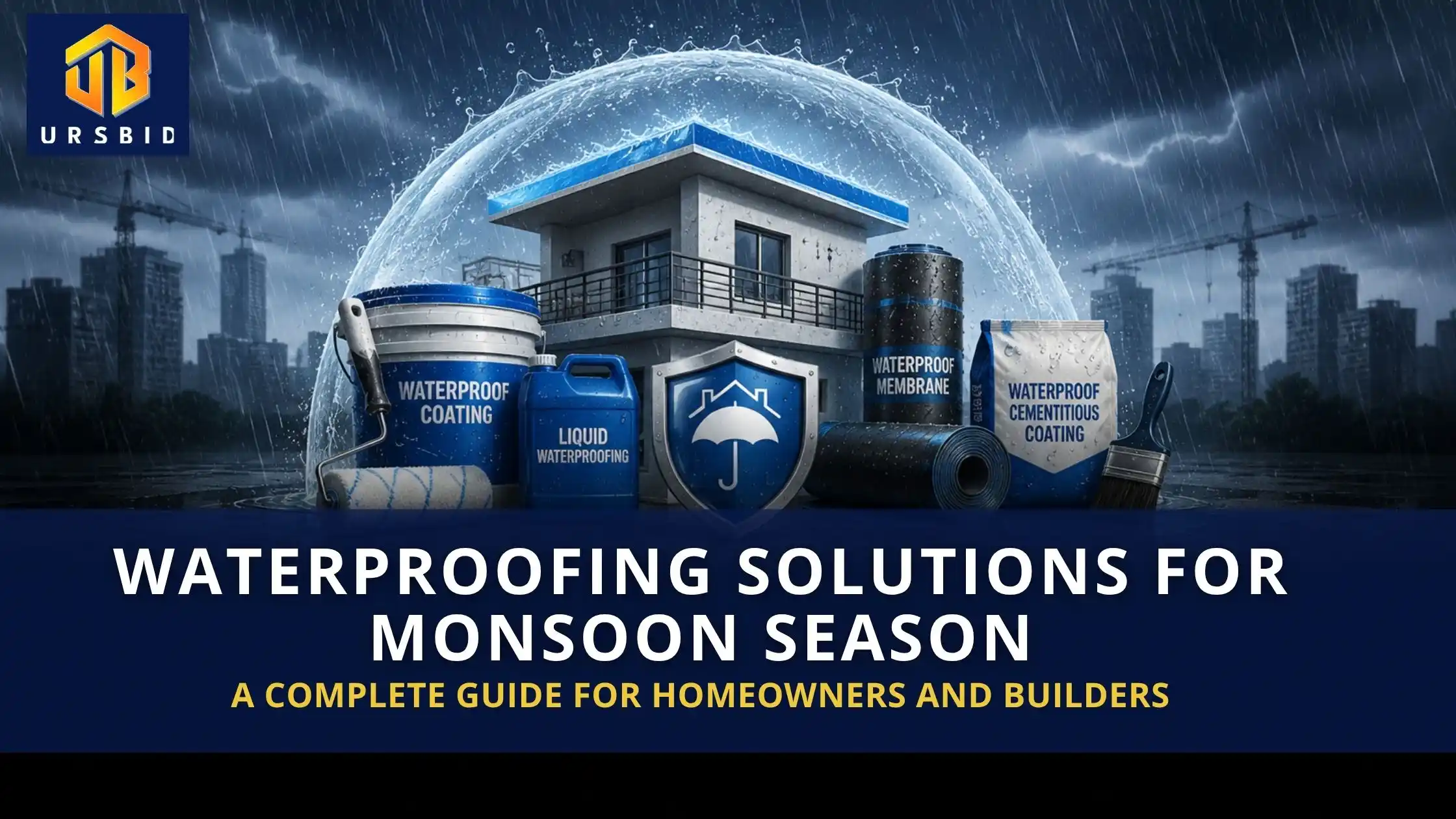
Every year, the first heavy monsoon shower reveals the same story on thousands of buildings across India — a damp patch spreading across a bedroom ceiling, paint peeling off a boundary wall, or water pooling stubbornly on a terrace that was supposed to drain in minutes. None of this is bad luck. It's almost always a sign that the right waterproofing solutions were never applied, or were applied poorly, before the rains arrived.
If you've ever mopped water off a windowsill during a downpour or watched a fresh coat of paint bubble and flake within a year, this guide is for you. We'll walk through why monsoon waterproofing matters, where buildings actually fail, which waterproofing solutions work best for each area of a home, and how to choose the right materials and contractors — before the next rainy season catches you off guard.
Why Monsoon Season Demands Serious Waterproofing Solutions
Water is patient. It doesn't need a large crack to get in — a hairline fissure, a poorly sealed joint, or a single gap around a pipe is enough. Once monsoon rains start, that small opening turns into a steady drip, and over weeks of continuous exposure, the damage compounds.
Unlike a one-time leak from a burst pipe, monsoon dampness is relentless. Humidity stays high for months, walls stay saturated, and structures rarely get the chance to fully dry out between spells of rain. This is exactly why waterproofing solutions matter so much more before monsoon than after it — treating a wall once it's already soaked through is far harder, slower, and costlier than sealing it in advance.
The consequences of skipping waterproofing go well beyond cosmetic damage:
- Structural weakening: Water seeping into concrete corrodes embedded steel reinforcement, causing it to expand and crack the concrete around it.
- Health hazards: Persistent dampness encourages mold and mildew growth, which can trigger allergies and respiratory issues.
- Rising repair costs: A ₹5,000 waterproofing job done today can prevent a ₹50,000 plastering and re-flooring job two years later.
- Reduced property value: Visible seepage and damp patches are red flags for buyers and tenants alike.
Where Buildings Actually Leak: The Common Trouble Spots
Before picking a product, it helps to understand where water gets in. Most seepage problems in Indian homes trace back to a handful of predictable areas.
1. Terraces and Roofs
Flat roofs and terraces take the most direct hit from monsoon rain. Poor slope design, cracked screed, or a waterproofing membrane that has simply aged out is usually the culprit. Standing water on a terrace for more than a day is almost always a sign that the drainage gradient or the waterproofing layer needs attention.
2. External Walls and Parapets
Walls facing the prevailing wind and rain direction absorb water directly through their surface, especially if the plaster has micro-cracks or the exterior paint has worn thin. Parapet walls are particularly vulnerable because they're exposed on both sides.
3. Bathrooms and Wet Areas
Even indoors, bathrooms, kitchens, and utility areas are high-risk zones. Water can seep through floor joints and travel to the ceiling of the room below, which is why bathroom leaks often show up as a stain in a completely different part of the house.
4. Basements and Foundations
Basements sit below the water table and face constant hydrostatic pressure, especially when monsoon rainfall raises the groundwater level. Without proper foundation waterproofing, basements can develop seepage even without any visible cracks.
5. Joints, Expansion Gaps, and Pipe Penetrations
Wherever two different materials meet — a wall meeting a window frame, a pipe passing through a slab, or an expansion joint between building sections — is a natural weak point that needs specific sealant-based waterproofing solutions.
Types of Waterproofing Solutions for Every Part of the Building
There's no single product that solves every leak. The right approach depends on the surface, the exposure, and the type of movement the structure experiences.
Cementitious Waterproofing
This is the most widely used method for terraces, water tanks, and bathrooms in India. It involves applying a cement-based coating mixed with waterproofing compounds directly onto the surface. It's rigid, durable, and works well on surfaces that don't flex much, though it can crack if the structure experiences significant movement.
Liquid Membrane (Elastomeric) Waterproofing
Applied as a liquid that cures into a flexible, rubber-like membrane, this solution is ideal for roofs and terraces exposed to temperature swings and structural movement. Its elasticity allows it to stretch across minor cracks without tearing, making it one of the most reliable waterproofing solutions for exposed rooftops.
Bituminous Waterproofing
Bitumen-based membranes and coatings have been used for decades on roofs and foundations. They offer strong water resistance and are relatively economical, though they need proper primer application and are best suited to areas with UV protection, since raw bitumen degrades under prolonged sun exposure.
Injection Grouting (Epoxy and Polyurethane)
For active leaks through existing cracks — especially in basements, water tanks, and structural joints — injection grouting is often the fastest fix. Epoxy grouting restores structural bonding in cracked concrete, while polyurethane grouting expands on contact with water to seal the gap instantly. This method is especially useful for retrofitting older buildings without breaking open large sections of the structure.
Waterproof Sealants for Joints and Gaps
Silicone and polysulfide sealants are used around window frames, pipe penetrations, and expansion joints — the small but critical gaps where rigid coatings alone won't hold.
Damp-Proof Courses for Walls
A damp-proof course is a horizontal barrier laid within a wall, typically near the base, to stop groundwater from rising up through masonry via capillary action — a common cause of the tide-mark staining seen on the lower portion of external walls.
Choosing the Right Waterproofing Solution: A Practical Checklist
There's a temptation to pick whatever product is cheapest or most commonly advertised, but a mismatch between the solution and the surface is one of the biggest reasons waterproofing fails within a year or two. Before finalising a product or contractor, it helps to check:
- Surface exposure: Is the area exposed to direct sun and rain (terrace), constant moisture (bathroom), or groundwater pressure (basement)?
- Structural movement: Does the surface expand and contract with temperature, requiring a flexible membrane rather than a rigid coating?
- Existing damage: Are there active cracks that need grouting before any surface coating is applied?
- Application timing: Waterproofing needs dry weather and adequate curing time — starting the work right before or during monsoon rarely gives the material time to cure properly.
- Warranty and material quality: Reputable waterproofing compounds typically carry a 5-10 year warranty; be cautious of unbranded products with no technical data sheet.
- Contractor expertise: Surface preparation (cleaning, crack repair, priming) often matters more than the product itself — even a premium membrane will fail on a poorly prepared surface.
When to Start: Timing Your Waterproofing Before Monsoon
The best window for waterproofing work is the dry period 4-6 weeks before monsoon onset. This gives the surface enough time to be cleaned, repaired, primed, coated, and properly cured before the first heavy rain tests it. Waterproofing done in a rush, mid-monsoon, on a damp surface rarely bonds correctly and often needs redoing the following year — turning a one-time investment into a recurring expense.
If you missed that window and monsoon has already started, injection grouting and sealant-based spot repairs are usually the only reliable options until the surface dries out enough for a full coating application.
DIY vs. Professional Waterproofing: What's the Real Difference?
Small touch-ups — resealing a window frame or patching a minor hairline crack — are reasonable DIY tasks with the right sealant. But full terrace waterproofing, basement treatment, or bathroom waterproofing under tiling involves surface-specific chemistry, correct curing conditions, and often multiple coats applied in sequence. A professional waterproofing contractor doesn't just apply the material; they diagnose the actual source of seepage, which is frequently different from where the leak appears indoors.
For most homeowners, the practical approach is: handle minor sealant work yourself, but bring in a specialist for terraces, basements, and any area with structural cracks.
Finding Verified Waterproofing Contractors and Materials
One of the biggest challenges homeowners and builders face isn't understanding waterproofing solutions — it's finding a contractor who applies them correctly, at a fair price, without long delays. Comparing multiple contractors, checking their material specifications, and getting transparent quotations can take weeks if done the traditional way, through word of mouth and site visits.
This is where a construction marketplace becomes genuinely useful. On URSBID, you can browse and compare waterproofing and damp-proofing service providers in your area, post your requirements, and receive competitive quotations from verified contractors instead of relying on a single recommendation. If your terrace also needs structural crack repair before waterproofing, URSBID's listings for epoxy grouting material and repair and maintenance services can be sourced through the same platform, saving you the trouble of coordinating separate vendors.
If your seepage problem is linked to bathroom or kitchen plumbing rather than the terrace, it's worth checking your water supply items and sanitary fittings for worn joints and fittings, since plumbing leaks are frequently mistaken for structural seepage. And once waterproofing and repair work is complete, browsing tiles and finishing options on the platform makes it easy to restore the surface without starting a fresh search from scratch.
Frequently Asked Questions
What is the best waterproofing solution for a terrace before monsoon? For terraces exposed to sun and rain, elastomeric liquid membrane waterproofing is generally the most reliable choice, since its flexibility handles both water exposure and thermal expansion better than rigid cementitious coatings alone.
How long does waterproofing last? Quality waterproofing solutions, applied correctly with proper surface preparation, typically last 7-10 years, though exposed terraces may need a top-up coat every 5 years due to UV and weather wear.
Can waterproofing be done during the rainy season? Full waterproofing coatings need a dry surface and clear weather to cure properly, so they're best avoided during active monsoon. Injection grouting for active leaks is one of the few methods that can be done even in wet conditions.
Why does my wall get damp even though there's no visible crack? Dampness without visible cracks is often caused by capillary rise from groundwater (needing a damp-proof course) or micro-porosity in old plaster that lets moisture through gradually — both are addressable with the right waterproofing solution.
Is cementitious or liquid membrane waterproofing better? Cementitious waterproofing suits rigid, low-movement surfaces like water tanks and bathroom floors, while liquid membrane waterproofing is better for terraces and roofs that expand and contract with temperature. Many professional applications actually combine both for maximum protection.
Final Thoughts
Monsoon waterproofing isn't a one-time purchase — it's a decision about where water is most likely to find its way into your building, and matching that risk with the right material, applied at the right time, by someone who knows what they're doing. Whether it's a terrace, a basement, or a stubborn bathroom leak, treating the actual source rather than the visible symptom is what separates a waterproofing job that lasts a decade from one that needs redoing next year.
If you're planning waterproofing work before the next monsoon, start early, get your surfaces inspected for cracks, and compare verified contractors and materials on a platform like URSBID rather than settling for the first quote you receive.