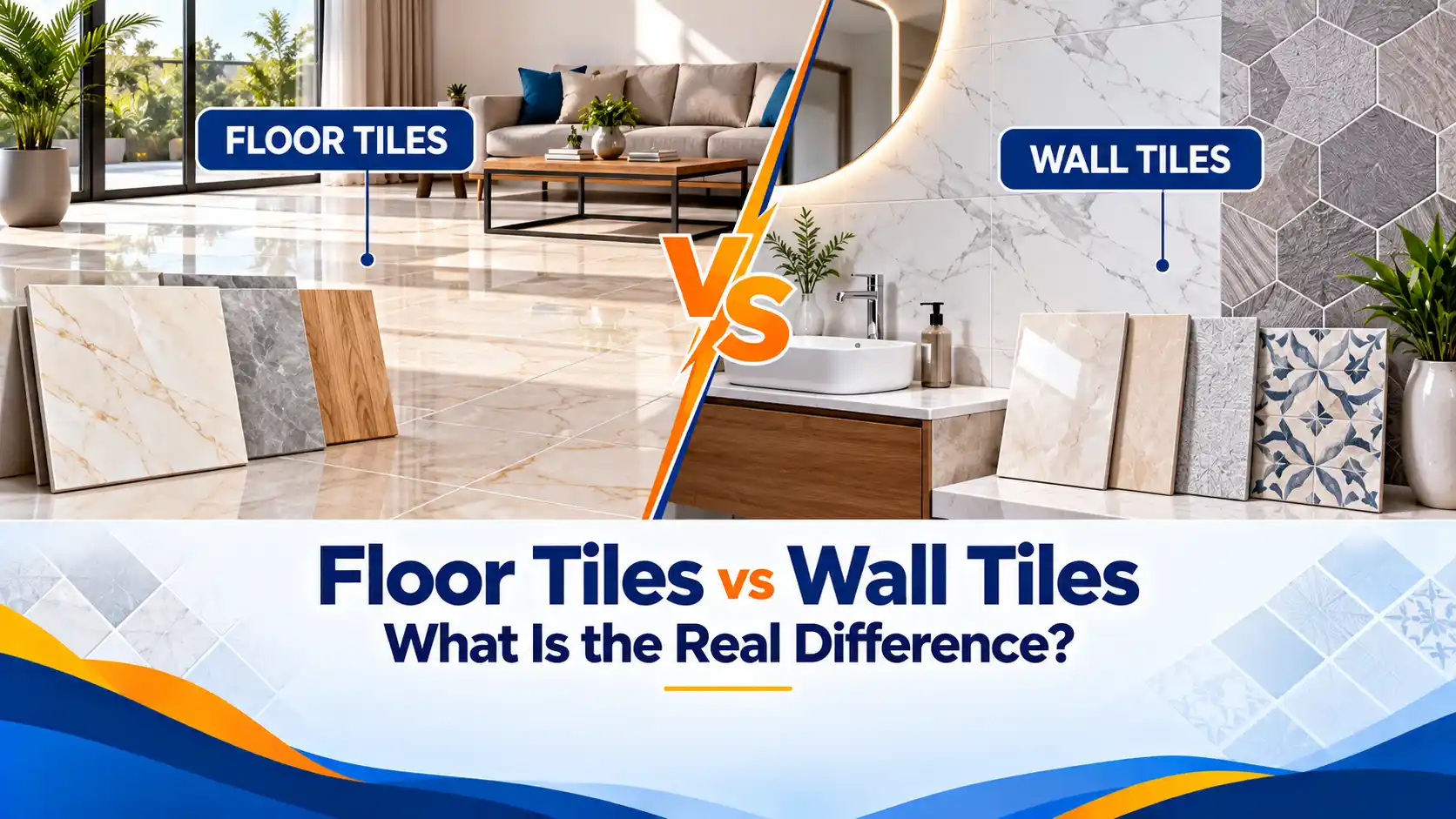
A homeowner once loved a wall tile design so much they asked their contractor to lay it on the living room floor instead. Within a year, the tiles had chipped at the edges and cracked in two spots where furniture legs pressed down daily. The contractor hadn't been careless, the homeowner had simply asked for something that tile isn't built to handle. Floor tiles and wall tiles might sit right next to each other in a showroom, but they're engineered for genuinely different jobs.
This guide breaks down the real difference between floor tiles and wall tiles, and answers the question that trips up so many buyers, can you actually use one in place of the other. If you're already comparing options, URSBID'sTop & Best Design Tiles selection covers both floor and wall-rated products from verified suppliers.
What Is the Core Difference Between Floor Tiles and Wall Tiles?
Floor tiles are made thicker, denser, and more impact-resistant to handle foot traffic and weight, while wall tiles are thinner, lighter, and generally more decorative, optimised for appearance rather than load-bearing durability.
This difference exists because the two surfaces face completely different demands. A floor gets walked on, has furniture dragged across it, and occasionally takes a dropped object. A wall just needs to look good and resist the occasional bump, it never bears weight the way a floor does. Manufacturers build each tile type around these different jobs from the raw material composition stage onward, which is why the two aren't simply interchangeable products in different sizes.
What Is the PEI Rating for Floor Tiles and Why Does It Matter?
PEI rating for floor tiles measures surface hardness and abrasion resistance on a scale of 1 to 5, and it's the single most important number separating a genuine floor tile from a wall tile.
Floor tiles need a PEI rating of at least 3 for light residential foot traffic, with higher ratings recommended for high-traffic areas like hallways and entryways. Wall tiles are rarely rated this way at all, since they're never expected to withstand the same abrasive wear a floor experiences daily. A tile with no PEI rating, or one rated too low, will visibly wear down, scratch, and lose its glaze finish surprisingly quickly once it's walked on regularly, which is exactly the mistake the homeowner in the earlier story ran into.
Can Wall Tiles Be Used on the Floor Instead of Floor Tiles?
Wall tiles generally cannot be used safely on the floor, since they lack the thickness, hardness, and slip resistance a floor surface needs to handle foot traffic and moisture without cracking or becoming dangerous.
Beyond wearing down faster, wall tiles are often glazed to a higher shine for aesthetic appeal, which makes them significantly more slippery underfoot than floor tiles, a real safety concern in bathrooms, kitchens, or any area exposed to water. Wall tiles are also generally thinner and more brittle under point-loads, meaning something as simple as a dropped pan or a heavy piece of furniture can crack a wall tile that a floor tile would easily withstand. The reverse swap, floor tiles on a wall, generally works fine structurally, since floor tiles exceed what a wall needs, though their weight can make installation slightly more demanding for a wall-mounted application.
Floor Tiles vs Wall Tiles: Side-by-Side Comparison
|
Factor |
Floor Tiles |
Wall Tiles |
|
Thickness |
Thicker, generally 8mm to 10mm or more |
Thinner, often 5mm to 7mm |
|
PEI rating |
Rated 3 or higher for residential use |
Rarely rated, not built for foot traffic |
|
Slip resistance |
Higher, especially for wet areas |
Lower, often glossier finish |
|
Water absorption |
Lower, suited to more demanding conditions |
Can be higher, acceptable for vertical surfaces |
|
Weight |
Heavier |
Lighter |
|
Typical finish |
Matte or textured for grip |
Glossy or decorative for appearance |
Why Does Tile Thickness Difference Matter Between Floor and Wall Tiles?
Tile thickness difference matters because a thicker tile resists cracking under point-loads and impact far better than a thin one, which is exactly why floor tiles are built noticeably thicker than wall tiles.
A floor absorbs constant pressure, from footsteps to furniture to dropped objects, and a thinner tile simply doesn't have the mass to distribute and absorb that stress without cracking over time. Walls face nothing close to this kind of mechanical stress, so manufacturers keep wall tiles thinner and lighter, which also makes them easier and cheaper to produce and install vertically. This thickness gap is one of the clearest practical signals, alongside PEI rating, for telling a genuine floor tile apart from a wall tile at the point of purchase.
How Big Is India's Floor Tile vs Wall Tile Market Split
Within India's ceramic tile industry, floor tiles account for roughly 48% of the market by segment, compared to around 40% for wall tiles, with the remaining share made up of vitrified and porcelain products, reflecting just how much larger residential and commercial flooring demand is compared to wall tiling. (Market data source:Maximize Market Research India Ceramic Tile Market Report, 2026.)
This gap has widened further with the growth of large-format vitrified flooring tiles in Indian homes, which now dominate new residential construction, while wall tiles remain concentrated mainly in bathrooms, kitchens, and accent wall applications rather than whole-room coverage.
What Mistakes Should You Avoid With Floor and Wall Tiles?
Don't install wall tiles on a floor just because you love the design. Ask your supplier whether the exact tile you want is also manufactured in a floor-rated version before committing to the look.
Don't assume a shiny, polished tile is automatically the better choice for a floor. That same shine that looks appealing on a showroom wall display can make a floor genuinely unsafe when wet.
Don't ignore PEI rating when comparing tiles that look nearly identical. Two tiles can appear the same in a photo while having very different durability ratings underneath.
Where Can You Buy Floor and Wall Tiles Online?
You can buy floor and wall tiles online through URSBID by posting your requirement and getting quotes from verified suppliers.
Once you know whether you need a floor-rated or wall-rated tile for your project, the next step is finding a supplier who can confirm the correct specification and deliver consistent quality. Toget tile rates through URSBID, describe your requirement, floor or wall, size, and finish, and registered vendors send their quotations directly, so you can compare pricing before committing to a single supplier.
Frequently Asked Questions
What is the difference between floor tiles and wall tiles? Floor tiles are thicker, denser, and rated for higher PEI abrasion resistance to handle foot traffic, while wall tiles are thinner, lighter, and generally more decorative, built for appearance rather than load-bearing durability.
Can I use wall tiles on my floor? Generally no, wall tiles lack the thickness, hardness, and slip resistance needed for a floor surface, and using them there can lead to cracking, excessive wear, and a slippery, unsafe surface.
Can I use floor tiles on a wall? Yes, floor tiles can usually be used on walls without any performance issues, since they exceed what a wall typically needs, though their extra weight can make installation somewhat more demanding.
What PEI rating should I look for in floor tiles? A PEI rating of 3 or higher is generally recommended for residential floor tiles, with higher ratings suited to high-traffic areas like hallways, entryways, and commercial spaces.
Are floor tiles more expensive than wall tiles? Floor tiles are often priced similarly to or slightly higher than wall tiles of comparable quality, reflecting their thicker construction and higher durability rating, though pricing varies significantly by brand, finish, and size.
Final Thoughts
Floor tiles and wall tiles are built for entirely different jobs, one absorbs daily foot traffic and impact, the other simply needs to look good on a vertical surface. Checking PEI rating, thickness, and slip resistance before choosing between them, rather than assuming any tile works anywhere, is what keeps a beautiful design choice from turning into a cracked, unsafe surface within a year.
Ready to source the right tiles for your project?Get tile rates on URSBID by posting your requirement, and receive quotes from verified suppliers.