A west-facing bedroom gets full afternoon sun. The AC runs all day, but the room never feels cool. The window glass is hot to the touch. Traffic noise comes straight through it. And in the morning, water droplets form on the inside of the pane.
All four problems come from one thing: a single sheet of glass. Double glazing is the usual fix. But it costs more, and it does not suit every window. This guide compares double glazing vs single glazing in simple words, with Indian costs, so you know where the upgrade is worth it.
What Is the Difference Between Double Glazing and Single Glazing?
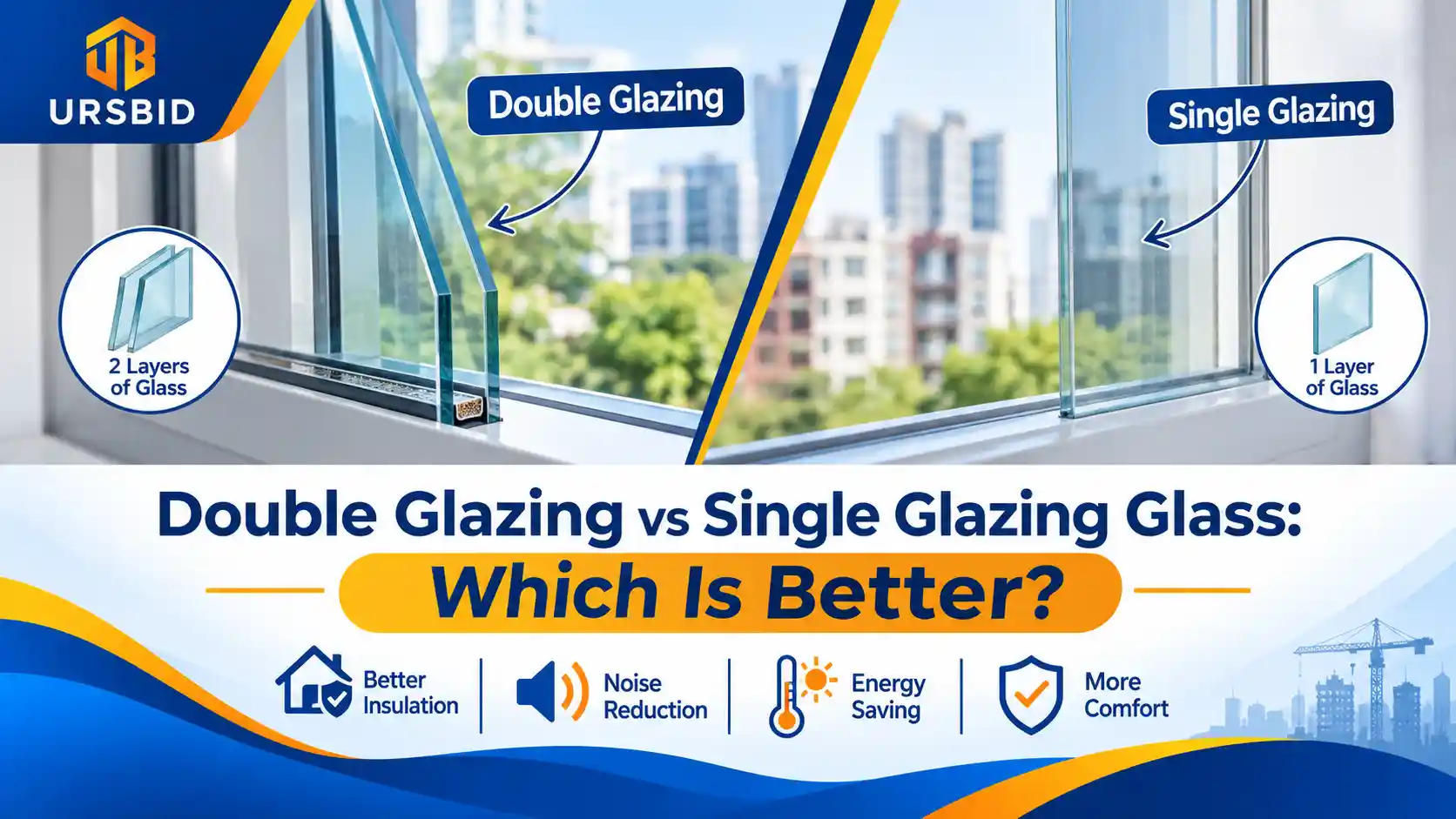
Single glazing has one pane of glass. Double glazing has two panes of glass with a sealed gap between them, filled with air or argon gas. That gap slows down heat and sound.
The sealed unit is called a double-glazed unit, or DGU. A common size is 6 mm glass, a 12 mm gap, and another 6 mm glass. Here is a quick comparison:
|
Feature |
Single glazing |
Double glazing |
|
Panes |
One |
Two, with a sealed gap |
|
Heat transfer (U-value) |
About 5.0 to 5.8 W/m²K |
About 1.8 to 2.8 W/m²K |
|
Noise reduction |
About 20 to 25 dB |
About 30 to 35 dB, sometimes more |
|
Condensation |
Common in AC rooms |
Much less |
|
Weight |
Lighter |
Heavier, needs stronger frames |
|
Cost |
Lowest |
Higher |
A lower U-value means less heat gets through. The figures above are typical ranges and change with glass type and gap. (Comparison source: Studiomatrx, Single vs Double Glazing in India.)
How Does Low-E Double Glazing Cut Heat in India?
Low-E double glazing cuts heat because a thin coating on the glass reflects heat while still letting light in. The second pane alone does less for sun heat than the coating does.
This point is important in India. A second pane mainly improves insulation and sound. But the sun's heat comes through as radiation, and the Low-E coating is what reduces it. So a double glazed unit with no Low-E coating on a sunny west window helps less than you might expect. Argon gas in the gap lowers heat flow a little further, for a small extra cost.
Choose Low-E glass for west and south-facing windows. For north-facing windows that get little direct sun, a plain double glazed unit may be enough.
How Much Does Double Glazing Noise Reduction Help?
Double glazing noise reduction is real. A typical double glazed unit cuts about 30 to 35 dB, against about 20 to 25 dB for single glass. That makes traffic sound much quieter.
Every 10 dB is roughly a halving of how loud a sound feels. So the step from single to double glazing is a big change for a bedroom on a main road. Some sellers quote higher figures of 25 to 40 dB, depending on glass thickness and design. Using panes of different thickness, or laminated glass on one side, usually improves sound control. Numbers vary by product, so ask for the test figure for the exact glass you are buying.
What Do Double Glazed Windows Cost in India?
The glass upgrade alone adds about Rs 180 to 400 per sq ft. A full double glazed window costs about Rs 350 to 1,400 per sq ft, depending on the frame and glass.
Here are indicative rates for 2026:
|
Item |
Rate (Rs per sq ft) |
|
Economy single-glazed window, installed |
About 150 to 250 |
|
Extra cost for Low-E argon double glazing |
About 180 to 400, plus 18% GST |
|
Full double glazed window, installed |
About 350 to 1,400 |
Here is a simple example. A 4 x 4 ft window is 16 sq ft. At Rs 180 to 400 per sq ft, the glass upgrade is about Rs 2,900 to 6,400 before GST, or about Rs 3,400 to 7,550 with 18% GST. That is my arithmetic from the range above. For one bedroom, the upgrade is often a modest part of the total fit-out cost.
The frame also changes the price. Whether you choose uPVC or aluminium, and the quality of the profile system, can move the rate a lot. Rates vary by city and brand, so use these figures as a guide and ask for quotes.
Is Double Glazing Worth It for Your Home?
Double glazing is worth it for AC rooms, west and south-facing windows, and noisy roads. It is less useful for quiet, rarely cooled spaces.
It pays off most when the AC runs for long hours, because less heat enters and the AC works less. One seller claims 15% to 25% lower cooling use in some homes. Treat such numbers as a claim, since savings depend on the room and the sun. It also helps with condensation and comfort near the window, and many buyers like the quieter room.
Where it helps less: windows in a store room, a utility area, or a room that is never air-conditioned. There, the extra cost may not come back.
Which Rooms and Windows Should Get Double Glazing?
Start with the windows that get the most sun, noise, or AC use. Skip small, shaded, or non-AC windows.
- Bedrooms with AC. Both comfort and sound matter here.
- West and south-facing living room windows. These take the hardest sun.
- Windows facing a main road. Sound reduction is the main gain.
- Home offices. Quiet and steady temperature help work.
- Skip: store rooms, utility areas, small bathroom vents, and non-AC rooms.
Does the Frame Matter as Much as the Glass?
Yes. A good double glazed unit in a poor frame loses most of its benefit. The frame must hold the extra weight, seal tightly, and not carry heat across.
Plain aluminium conducts heat well, so aluminium frames should have a thermal break, which is a plastic strip that stops heat flowing through the metal. uPVC frames insulate naturally. Double glazed units are heavier than single panes, so the frame and hardware must be strong enough. Poor seals can let moisture into the gap, and then the glass fogs between the panes. Good installation matters as much as good glass.
What Mistakes Should You Avoid With Double Glazing?
- Do not buy double glazing without Low-E on sun-facing windows. You will pay for a second pane but miss much of the heat benefit.
- Do not ignore the frame. Check for a thermal break in aluminium, and check that the hardware can handle the weight.
- Do not compare quotes without the same specification. Check the glass thickness, the gap, the gas, and the coating.
- Do not forget safety glass. Large windows, doors, and balconies may need toughened or laminated panes.
- Do not use untrained fitters. Poor sealing leads to fogging between the panes. You can find glass work services on URSBID for fitting.
- Do not forget GST. Many quotes show the glass price before 18% GST.
Where Can You Buy Double Glazed Glass Online?
You can buy glass online through URSBID by posting your requirement and getting quotes from verified suppliers.
Once you know which windows need double glazing, the next step is to compare rates. To Buy Glass Online through URSBID, share the glass type, thickness, coating, size, quantity, and delivery place. Registered vendors will send their quotations directly to you. Ask each one for the exact specification and the warranty on the sealed unit.
Frequently Asked Questions
What is the difference between double glazing and single glazing?
Single glazing has one pane of glass. Double glazing has two panes with a sealed gap between them, filled with air or argon. This lowers heat transfer and noise.
Is double glazing worth it in India?
Yes for AC rooms, sun-facing windows, and noisy roads. It is less useful for non-AC and shaded windows.
How much does double glazing cost in India?
The glass upgrade adds about Rs 180 to 400 per sq ft. A full double glazed window costs about Rs 350 to 1,400 per sq ft, depending on the frame.
How much noise does double glazing reduce?
A typical unit cuts about 30 to 35 dB, compared with about 20 to 25 dB for single glass. Some designs do better.
Does double glazing need Low-E glass?
For hot, sunny India, Low-E glass is strongly worth adding on west and south windows. It cuts solar heat more than a second pane does.
Final Thoughts
Double glazing is not for every window. But on sunny, noisy, air-conditioned windows, it can make a room cooler, quieter, and drier. Choose Low-E glass for the sun side. Pair it with a good frame and a careful installer. Compare quotes with the same specification. Then your upgrade will pay off in comfort for years.
Ready to compare prices? Get glass rates on URSBID by posting your requirement, and receive quotes from verified suppliers.